How Mobile Phones Are Transforming the Airport Experience for Passengers
In the modern travel landscape, mobile phones have become indispensable companions, revolutionising the way we navigate airports. From booking flights to boarding planes, these devices are central to almost every aspect of the passenger journey.
As airports continue to embrace digital transformation, emerging technologies are reshaping how travellers use their mobile phones, enhancing convenience, efficiency, and overall experience.
1. Mobile Check-In and Digital Boarding Passes
Gone are the days of printed boarding passes and long queues at check-in counters. Mobile check-in and digital boarding passes have streamlined the airport experience, allowing passengers to check in, select seats, and download their boarding passes directly to their phones. This not only saves time but also reduces the need for paper, aligning with sustainability efforts.
Biometric technology on mobile phones, such as facial recognition and fingerprint scanning, allows passengers to streamline their airport experience. By securely storing their identity data on their phone, travellers can use biometrics to verify their identity whenever needed. This eliminates the need for physical documents, reduces wait times, and makes the entire travel experience faster and more convenient.
2. Real-Time Flight Updates and Navigation
One of the most stressful aspects of air travel is uncertainty — whether it’s delays, gate changes, or tight connections. Mobile apps now offer real-time flight updates, ensuring passengers are always informed about their journey. These apps provide notifications about boarding times, gate assignments, and even baggage claim details, all in real time.
In addition, indoor navigation apps are transforming the way travellers move through airports. Using augmented reality (AR) and GPS technology, these apps guide passengers to their gates, lounges, shops, and even charging stations. With just a few taps, travellers can easily navigate complex airport layouts, minimising the risk of missing flights.
3. Mobile Payments and Contactless Transactions
Mobile payment solutions, such as Apple Pay and Google Wallet, are increasingly being adopted across airport retail, dining, and duty-free stores. This shift towards contactless transactions not only speeds up the purchasing process but also enhances hygiene—a significant consideration in the post-pandemic world.
Moreover, mobile wallets allow passengers to store multiple currencies, making it easier to manage expenses during international travel. Combined with loyalty apps that store frequent flyer miles and reward points, mobile payments are becoming the go-to method for savvy travellers.
4. Entertainment and Connectivity
For many passengers, mobile phones are a primary source of entertainment during long waits and flights. Airports are responding by offering improved Wi-Fi connectivity, allowing travellers to stream movies, catch up on work, or connect with loved ones without interruption. Additionally, charging solutions, such as those provided by ChargeBox, ensure that devices remain powered up throughout the journey.
Emerging technologies like 5G are set to further enhance the in-airport experience. With faster download speeds and reduced latency, 5G will enable seamless streaming, video calls, and even augmented reality experiences, transforming idle time at the airport into productive or enjoyable moments.
5. Personalised Travel Assistance
Artificial intelligence (AI) is playing a growing role in personalising the airport experience. Chatbots and virtual assistants, integrated into airline apps, provide travellers with real-time answers to their queries, from baggage allowances to lounge access. Some apps even offer personalised recommendations for dining, shopping, and activities based on the passenger’s preferences and flight schedule.
AI-driven apps also help passengers manage their travel plans, offering suggestions on the best time to leave for the airport, traffic updates, and weather forecasts. VR, on the other hand, offers immersive experiences, such as virtual tours of the airport or even pre-flight relaxation sessions. These technologies not only enhance the passenger experience but also offer new opportunities for retail and entertainment, creating a more engaging and enjoyable environment.
6. Sustainability and Environmental Considerations
As environmental concerns take centre stage, airports and airlines are increasingly focusing on sustainability. Mobile phones play a key role in these efforts by reducing the need for paper tickets, boarding passes, and brochures. Digital receipts, mobile passports, and electronic visas further minimise paper waste substantially.
Conclusion
Mobile phones have undeniably transformed the airport experience, making travel more efficient, convenient, and personalised. As emerging technologies like biometric security, 5G, and AI continue to evolve, the role of mobile devices in air travel will only expand.
The availability of airport charging services is no longer just a convenience — it’s a necessity. Offering reliable and fast charging ensures that passengers can stay connected, access real-time updates, and utilise essential apps for navigation, payments, and entertainment throughout their journey.
Airports and airlines that embrace these essential innovations to boost the passenger experience will be better positioned to meet the needs of today’s tech-savvy travellers, directly contributing to a smoother, less stressful and more informed, travel experience for all.
The Future of Device and Smartphone Charging: Understanding USB-C Power Delivery
In recent years, USB Type-C has become the standard connection for charging a multitude of devices, from smartphones and tablets to laptops and beyond. This evolution in charging technology has revolutionised how we power our gadgets, offering numerous advantages that enhance convenience, efficiency and speed. In this blog, we’ll delve into the benefits of USB-C power delivery, explore how this charging technology works, and provide tips on selecting the right adapters and cables.
USB Type-C: The Standard Connection?
USB Type-C, commonly referred to as USB-C, is a versatile and reversible connector that has swiftly become the go-to standard for modern devices. Unlike its predecessors, USB-C is designed to handle not just data transfer but also power delivery, allowing it to charge devices quickly and efficiently. Its symmetrical design means it can be plugged in either way, eliminating the frustration of trying to insert the connector incorrectly.
Advantages of Power Delivery via USB-C
One of the standout features of USB-C is its support for USB Power Delivery (PD). This technology offers several key advantages:
1. Faster Charging: USB PD allows for higher power levels, meaning devices can charge much faster compared to older USB standards. This is particularly beneficial for high-capacity devices like laptops and tablets.
2. Universal Compatibility: USB-C PD can charge a wide range of devices, from smartphones to laptops, using the same cable and power adapter. This reduces the need for multiple chargers, simplifying your tech life.
3. Enhanced Safety: USB PD includes features that protect devices from overcharging, overheating, and other potential hazards, ensuring a safer charging experience.
4. Flexibility: With variable power delivery, USB PD can adjust the power output according to the device’s requirements, making it highly versatile.
USB-C Power Delivery. How it works.
How the Charging Technology Works: USB Power Delivery is an advanced specification that significantly improves the standard USB charging protocols. Here’s how it works:
Negotiation Process: When a USB-C cable is connected to a device, the charger and device communicate to determine the optimal power level. This negotiation ensures the device receives the correct amount of power without exceeding its capacity.
Variable Power Levels: USB PD can deliver power at varying levels, typically ranging from 5V (volts) to 20V, and up to 100W (watts). This flexibility allows it to charge everything from small smartphones to large laptops.
Bidirectional Charging: USB PD supports bidirectional power delivery, meaning a device can either receive power or provide power to another device. This is particularly useful for scenarios where one device, like a laptop, can charge another, such as a smartphone.
Which Power Adapter is best for you?
Choosing the right power adapter is crucial for efficient and safe charging. Here’s how to ensure compatibility:
1. Check the Device’s Specifications: Look at your device’s user manual or manufacturer’s website to find the recommended power requirements.
2. Examine the Adapter’s Output: Ensure the adapter’s voltage and wattage match or are within the acceptable range for your device.
3. Verify USB PD Support: If your device supports USB PD, make sure the adapter does as well. Many modern adapters explicitly state their compatibility with USB PD.
4. Connector Type: Confirm that the adapter has a USB-C output, as using the correct connector type is essential for compatibility.
The Best Cable for Charging via USB-C
Not all USB-C cables are created equal. Here’s what to consider when choosing a cable:
Power Rating: Ensure the cable supports the power levels required by your device. High-quality cables often list their power ratings on the packaging or cable itself.
Data Transfer Speeds: While primarily used for charging, USB-C cables can also transfer data. If this is important, look for cables that support higher data transfer rates.
Build Quality: Opt for cables with robust construction to avoid wear and tear. Features like reinforced connectors and braided exteriors can enhance durability.
Certification: Cables that are USB-IF (USB Implementers Forum) certified have been tested for compliance and safety, ensuring reliable performance.
ChargeBox: UK-designed and manufactured.
We only use real Apple Type C USB cables for all our latest charging solutions. We also strengthen them to give them a x 10 lifespan. That’s the difference between a cable that would last 400 charges and one that lasts 4,000!
Conclusion:
USB-C and USB Power Delivery are transforming the way we charge our devices, offering faster, safer, and more versatile options. USB-C has undeniably set a new standard in the realm of charging technology. Its versatility, speed, and efficiency make it an essential component in our increasingly connected lives.
Understanding how this technology works and knowing how to choose the right adapters and cables can significantly enhance the charging experience and let’s face it no one likes waiting more time than they need to, for their phone battery to charge! 🔋
Mobile Phone Addiction and Nomophobia: Understanding the Digital Epidemic
Understanding Mobile Phone Addiction and Nomophobia: A Digital Epidemic
In today’s hyper-connected world, mobile phones are indispensable, offering unparalleled convenience by keeping us connected, informed, and entertained. However, this convenience has a downside: mobile phone addiction, a growing global concern, especially in the UK. One specific manifestation of this addiction is known as Nomophobia.
What is Nomophobia?
Nomophobia is the fear or anxiety associated with being without a mobile phone or beyond mobile phone contact. This term emerged from a study commissioned by the UK Post Office in 2008, highlighting the extent of mobile phone dependency among the public. Symptoms of nomophobia include:
- Panic or anxiety when the phone battery is low or there is no network coverage.
- Constantly carrying a charger or backup battery.
- Using the phone in inappropriate settings, such as during meals or social gatherings.
What is Mobile Phone Addiction?
Mobile phone addiction is characterized by an over-reliance on mobile devices, significantly interfering with daily activities, personal relationships, and productivity. Key signs of this addiction include:
- Excessive checking of the phone, even without notifications.
- Anxiety when the phone is not accessible.
- Spending more time on the phone than intended.
- Neglecting face-to-face interactions in favor of mobile device use.
Factors Contributing to Mobile Phone Addiction
Several factors contribute to the high levels of mobile phone addiction in the UK:
- Social Media: Platforms like Instagram, Facebook, and TikTok are designed to be addictive, encouraging continuous engagement.
- Work Demands: The rise of remote work and the expectation of constant availability compel many to check their phones regularly.
- Fear of Missing Out (FOMO): This psychological phenomenon drives individuals to stay connected to avoid missing out on important events, news, or social interactions.
Who Are the Most Addicted?
Certain demographics in the UK show higher levels of mobile phone addiction:
- Young Adults: Those aged 18-24 are particularly prone to mobile phone addiction. A University of Derby study found that 13% of young adults could be classified as “addicted” to their smartphones.
- Teenagers: The NHS has expressed concerns about the impact of excessive phone use on teenagers’ mental health, citing increased levels of anxiety, depression, and sleep deprivation.
- Professionals: Many working professionals also exhibit signs of mobile phone addiction due to the constant need to stay connected for work, coupled with social media use.
The Extent of Mobile Phone Addiction in the UK
Recent statistics paint a concerning picture of mobile phone usage in the UK:
- High Usage Rates: According to a 2023 Ofcom report, the average UK adult spends over 3 hours and 23 minutes per day on their mobile phone, highlighting our growing reliance on these devices.
- Frequent Checks: Research indicates that the average UK user checks their phone approximately 58 times a day, with younger adults (aged 18-24) checking around 79 times a day.
- Bedtime Usage: A Deloitte survey found that 41% of UK adults check their phones within five minutes of waking up, and 37% check their phones just before going to bed, leading to disrupted sleep patterns and other health issues.
Consequences of Mobile Phone Addiction
Mobile phone addiction and Nomophobia can lead to several adverse effects:
- Mental Health Issues: Continuous mobile phone use is linked to increased anxiety, stress, and depression. The constant bombardment of notifications and the pressure to stay connected can be overwhelming.
- Sleep Disruption: Exposure to blue light from screens before bedtime can interfere with sleep patterns, leading to insomnia and poor-quality sleep.
- Decreased Productivity: Frequent phone use can distract individuals from their tasks, leading to decreased productivity at work or school.
- Social Impact: While mobile phones are designed to keep us connected, excessive use can lead to social isolation, with people spending more time on their devices than interacting face-to-face with family and friends.
Combating Mobile Phone Addiction
Combating mobile phone addiction requires a multi-faceted approach:
- Digital Detox: Encourage periodic breaks from mobile phone use to reduce dependency.
- Setting Boundaries: Establish phone-free zones and times, such as during meals or an hour before bedtime.
- Mindfulness Practices: Techniques like meditation can help reduce anxiety associated with nomophobia.
- Professional Help: For severe cases, cognitive-behavioral therapy (CBT) has proven effective in managing addiction.
Conclusion
Mobile phone addiction and Nomophobia are growing concerns, particularly in technologically advanced societies like the UK. By understanding the signs of addiction and taking proactive steps to manage mobile phone use, individuals can regain control over their lives and reduce the negative impacts on their mental and physical well-being. With awareness and appropriate interventions, it is possible to foster a healthier relationship with our digital devices.
Sources:
- Ofcom Report 2023
- Deloitte Survey
- University of Derby Study
- NHS Mental Health Concerns on Teenagers and Mobile Phone Use
The Apple Lightning cable is Dead, Long Live the Apple Lightning cable!
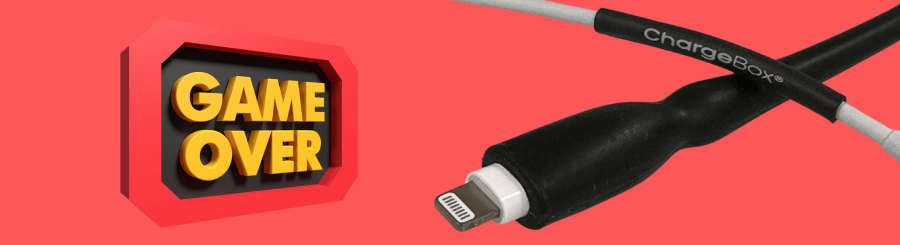
When Phil Schiller, then SVP at Apple, introduced the Lightning cable in 2012 with the launch of the iPhone 5, he said it was “the cable for the next decade”. Sure enough – and having exceeded that with 11 years under its belt – it has been a reliable cable and we can’t imagine using a non-reversible cable any more (even though the EU wanted to standardise around that stupid micro-USB plug). @ChargeBox we have found it to be the best cable (though not without our modification to the junction of cable and head which extended life from 300+ charges to 4,000+; more on that in a future post).
The actual ending is very reliable – far more so than USB-C which has a tendency to break off. You can occasionally get dirt or corrosion on the pins, but this can usually be cleaned off quickly.
With the introduction of USB-C to all iPhone 15 models, it was portrayed as the death knell for Lightning. Of course, in many ways it is – and over future years, will undoubtedly be. But in one clever move, Apple actually made the Lightning cables you already have MORE useful, not less ($29 purchase required!).
Indeed stay with me here while I explain, slightly tongue in cheek, that the Lightning cable has now become the only true Universal cable! There’s even something for Android users too.
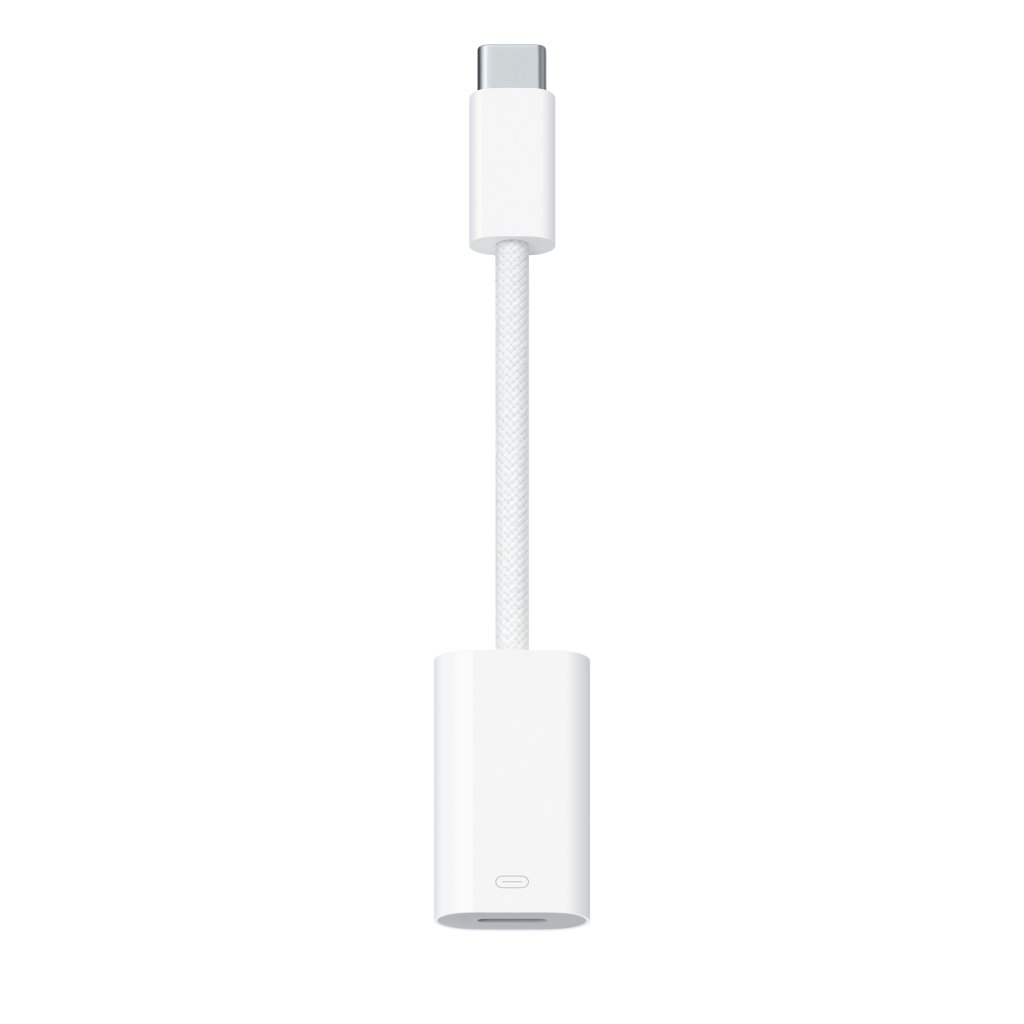
If you’re like me, you’ll have quite a few Lightning cables around the house and office – for charging phones, AirPods, older iPads, and even pencils and keyboards. I’ve got quite a few USB-C to Lightning as well as some older USB-A to Lightning.
With the release this week of the simple USB-C to Lightning dongle adapter you can now plug in a Lightning cable into a USB-C device. Ostensibly to protect investment in things such as music systems, car adapters etc, this little gem also has the added advantage of allowing you to use Lightning cables to charge not just iPhone 15 models, but also iPad Pros, and, wait for it, ANY recent MacBooks – Air and Pro varieties! (Hang on non-Apple users!)
I picked up my adapter at the local Apple Store yesterday – the person I spoke to didn’t know it existed but they found the stock. It has some useful benefits for our business in field testing which first brought it to my attention. I wondered if it would work with my iPad Pro? And of course, why wouldn’t it work? Indeed using it with my 11.9” M1 iPad Pro I was able to see around 26W charging at 9V with my 96W MacBook Pro charger and USB-C to Lightning cable. I have seen 15V charging when the iPad Pro starts at very low battery with up to 35W, so a limitation here is that I think 27W (9V/3A) is as far as this goes. But that’s almost full speed charging of a modern iPad (note it’s also higher than the 20W charger Apple have typically included if you have access to a higher power USB PD charger such as those with MacBooks).
So, then I thought if it can do this, it might also allow charging my new 15” MacBook Air. And, lo and behold, this also worked. Yes, charging a modern laptop with a Lightning cable! I was able to confirm these details through the “About this Mac” —> System Report —> Power.
It advertised to the MacBook Air as a 28W charger – specifically identifying as the Apple USB-C to Lightning Adapter. (I’m guessing it has a chip in it which probably contributes to the price and which converts the power signalling from Lightning protocol to USB-C). Obviously, it’s not as good as the 70W charger which is optional for this MacBookAir, but a good match for the 35W dual charger in a pinch and not far off the 30W charger included with the base MacBook Air. But, wait. There’s MORE!
Then I started wondering about all the old USB-A adapters out there. Amazingly these work too with 11W recorded into the MacBook Air using a 12W old iPad charger.
So, not only does this adapter allow you to continue using your Lightning cables with new phones, it also allows you to charge ANY other Apple USB-C devices with almost any USB based charger and any Lightning cable.
Ironically, Apple’s done more for sustainability with this one action than the EU’s “rule” about USB-C – which by itself is a big initial negative rendering lots of chargers and cables useless without such solutions.
If you had to take just one cable with you for all your Apple gear, the answer may turn out to be Lightning!
If you’re not one of the 1 billion+ Apple users, how does this help YOU?
Well, for Android users – though I haven’t tested this – it should also allow you to use Lightning cables to charge Android phones – including providing pretty good USB PowerDelivery charge to 27W. So, a cable for every situation! Right now, the only true Universal cable. How ironic, EU? But very much in-tune with Apple’s sustainability push at the announcement event.
Here’s a handy summary of what you can do:
- You’ll need the Apple USB-C to Lightning adapter for this £29/$29 at the Apple Store. You plug a Lightning cable INTO the adapter and then plug the adapter INTO a USB-C device.
- The faster the charger you use, the faster the charging experience, but any charger above 30W is not going to help any further
- If you’ve forgotten the USB-C to USB-C cable that came with your new iPhone15, you can charge with this setup at similar speeds to iPhone 14 models.
- You can charge a USB-C iPad using this setup at a good speed (depending on charger).
- You can charge any USB-C based MacBook using this setup at a decent speed (MacBook Air models and using a 30W charger) or an acceptable speed (MacBook Pro models). In a pinch even a USB-A charger and USB-A Lightning cable will charge these devices up but over a much longer period (USB-A limits of 12W are an absolute maximum). But this would be ok in an overnight situation.
- You should be able to charge almost any Android phone that has a USB-C input using this setup and with approximately 0-50% charge in 30 minutes using a 20W (or ideally 30W) charger.
- You should also be able to charge larger USB-C based tablets and laptops using this setup, with power dependent upon the charger available (again up to around 27W).
- Of course, this same setup (without the adapter) can continue to charge all of your Apple devices and peripherals.
- Taking the adapter with you (Android or Apple users) allows you to “hijack” any friends Apple Lightning configuration to charge your USB-C based device.
So, this little gem of a dongle is a real get-out-of-jail device for all sorts of situations, and useful for many road warriors to carry around. If you have any other situations you’ve found it useful or think it might be useful, let us know and we can update this post.
Thanks for reading!
What are the risks of public phone charging?

This month the FBI warned that using public charging may put your data at risk but what are the REAL risks of using public phone charging?
ChargeBox has provided secure charging solutions for public use since 2005. We are privileged to partner with many of the world’s best-known retail, education, public transport, healthcare and event organisations.
We have never experienced a breach of our users’ data in all that time with over 55 million charges provided!
So let’s look at what we know about public charging stations and the risks you need to be aware of when using one.
What is Juice-Jacking?
“Juice Jacking” is a cyber-attack where a hacker gains unauthorised access to a device such as a smartphone by compromising the USB port. Once malware is installed on a device, it can perform various malicious actions, such as stealing sensitive data, track user activity, or even give hackers remote access to the device.
OMG, that sounds scary. Does it happen a lot?
No, it doesn’t. It’s unclear how common these attacks are; any instances have not been widely publicised. The risk was first identified in 2011, so it’s not a new threat.
So, the risk of it happening is extremely low?
The risk of ‘Juice Jacking’ is infinitely small. However, your safety and access to essential phone capabilities are at risk if your battery is low or out of power. These risks are far higher than the danger of having your device hacked.
So are public charging solutions safe?
It’s not possible to say, with absolute 100% certainty, that ALL public charging solutions are safe but as with most things in life, it’s up to the individual to make informed decisions.
That makes sense. Can I limit the likelihood of this happening to me?
It’s important to practice good cybersecurity habits. Here’s what we recommend:
- Always keep your device up-to-date with software updates, especially security updates. This is your first level of protection against any form of attack on your device in any situation.
- Once software updates are no longer available due to the age of your device, you should consider getting a newer device.
- If you are using a public charging solution, where are you? If you’re in a location managed by a respectable company, you can expect that company to have procured a safe & secure solution that can’t be tampered with.
- If you’re unsure who is providing a solution, look for a name and a website. Check the origins of the equipment, the company, and its data and device security pledges.
What precautions does ChargeBox take to ensure the safest and most secure charging experience?
- Our charging solutions, including electronics and firmware, are designed and manufactured in the UK. We use our own software to control our solutions with the highest levels of security in mind.
- We are governed by national laws in the countries we operate, and our business depends on our end users having a great experience and our clients who host ChargeBox giving a great experience to their visitors.
- ChargeBox solutions are connected securely to our servers, giving us precise information about operational levels and recording the safety of the charge.
- The charging components and cable endings we use are all securely locked so they are not accessible to third-party agents without evidence of tampering.
Isn’t this all a storm in a teacup? Surely the FBI has got more significant cybersecurity concerns to deal with?
Yes! It distracts from device and data safety dangers for which the FBI has been notably absent – namely, the sophisticated malware attacks aided by systems such as Pegasus and others.
Finally, out of interest, what data does ChargeBox access?
Our users’ data privacy is a fundamental aspect of our business model and company ethics. For complete details of your data privacy with any interactions with our stations or our company please visit:
https://www.chargebox.com/your-data-privacy-with-chargebox/
Thanks for reading!
The 5 things you MUST consider when providing a public charging service

The importance of our mobile devices has never been in doubt. Most adults couldn’t cope without their mobile phones for more than a day. So, while we’re surprised that 1 in 7 of us use our phone as a mirror (you vain bunch!) we’re not surprised that 55% of people describe running low on phone battery as their ‘nightmare scenario’.
That’s because we use our mobile phones for everything. The days of paper train tickets and pound coins are long gone. And who can imagine a physical COVID passport?? If we’re not sharing things with our friends, family and social followers we’re filling in the time on the bus with ‘All of Us Are Dead’.
When you consider the essential services you offer, phone charging should be at the top of the list in this digital age. Free Wi-Fi is a common service, but what use is Wi-Fi if your phone is dead or you’re scared to use it because you want to preserve the last dribble of battery?
SO, if you appreciate the importance of mobile devices in the customer journey and want to support their usage in your environment these are the 5 things you MUST consider when providing a charging service:
When you need to charge your phone what will be the measure of satisfaction with a service? What % battery you get in a short period of time of course. Getting a 7% battery charge in 10 minutes is just…well a bit meh. Genuine fast charging can take you from zero to 20% battery in just 10 minutes. An experience that truly delights. The speed and depth of charge you provide are absolutely key.
Read the instructions, download an app, fill in your payment details. No thanks. I just need to charge my phone! A service that is intuitive and easy to use saves people time and confusion and ensures the greatest adoption of your new customer experience.
Who is responsible for a mobile device if it gets damaged or stolen whilst charging? If a provider doesn’t use manufacturer-approved components in their solutions it increases the likelihood of delivering an unsafe charge. Ask providers if they will take responsibility and guarantee the safety and security of mobile devices for you?
You should be buying a service that will last for many years and provide a reliable and continuous service day in day out. With whatever solution you choose something will go wrong eventually, it’s just what happens when providing a service in a busy public environment. How do you mitigate that and what support do you need to ensure a reliable and continuous customer experience?
Technology changes fast. The majority of phone charging providers’ technology is already out of date. Take battery pack rentals, for example, the maximum charging power they can deliver is between 7.5-10W. The new Samsung S22 Ultra can take a charge of 45W. A battery pack isn’t going to give an effective charge. And phone power requirements and battery size will only get bigger. The way of delivering a charge will also change (although we’d leave rooms that wirelessly charge to plot for a Wes Craven movie). A service that is future-proofed for the inevitable innovation in mobile technology is key and will save you more money in the long run.
If you want to know what ChargeBox thinks is important when providing the best experience for the venue and user then get in touch. We’re also happy to chat about our favourite movies.
Bluewater builds back better for the new customer journey
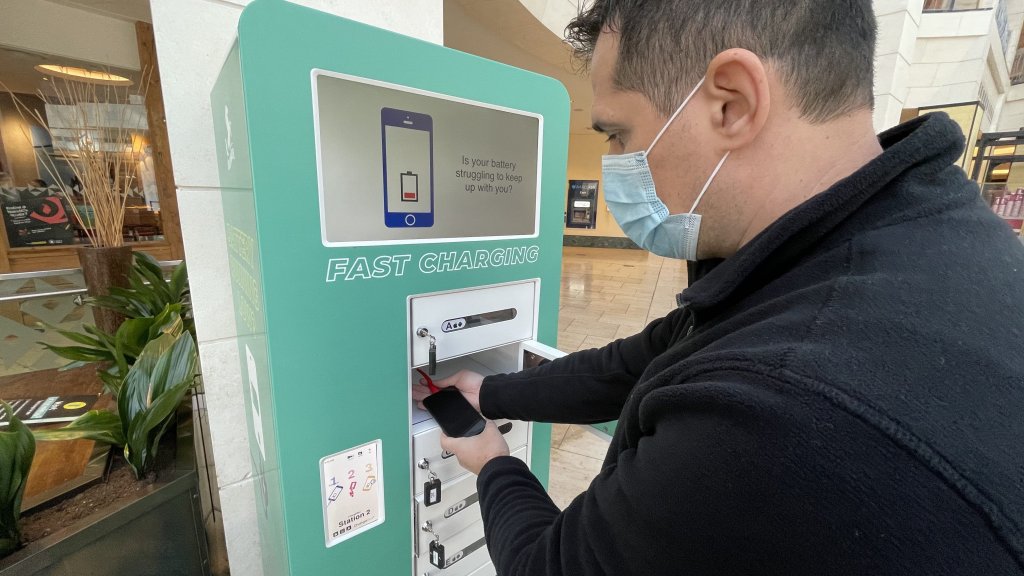
The first shopping centre in Europe to offer its shoppers free, fast mobile device charging
London, UK: ChargeBox today announced a new partnership with Bluewater, one of Europe’s leading retail and leisure destinations to offer its guests free, fast mobile device charging.
Bluewater is the first retail destination in Europe to offer ChargeBox’s Fast Charge technology which is up to 4 times faster than most shoppers are used to at home*. Therefore a device can be charged from zero to 50% in just 30 minutes, with no cost attached.
Bluewater recognises the importance of keeping their guests connected and that there are few things as irritating or anxiety-inducing as having a low phone battery. The phone is critical to the customer journey and central to the new experiences and technologies being deployed by retailers, from AR gamification to automated mobile checkout. The exponential growth in mobile proximity payments as a convenient alternative to cash post-pandemic gives additional importance to having a charged device.
Ian Hobson, CEO at ChargeBox, says, “We’re thrilled to be providing our brand new, market-leading fast charging solution at Bluewater. They recognise the importance of mobile devices in the shopper journey and are leading the way in improving the shopper experience post-pandemic.”
Robert Goodman, Director of Regional Shopping Centres, Landsec, says “We are always looking at innovative solutions to enhance experiences and to ensure our guests are fully catered for throughout their visit at Bluewater. ChargeBox will provide an additional service and complement the concierge, click and collect elements also available whilst providing connectivity for all.”
The benefits of this new partnership include:
· Improving the guest experience post-pandemic
· Supporting new consumer journeys reliant on mobile devices
· Surprising and delighting Bluewater visitors
About ChargeBox:
Since 2005, ChargeBox has led the way in providing secure out-of-home charging for mobile devices. We are the experts in helping companies keep their customers charged and connected and support mobile technology’s new demands.
Our clients benefit by improving customer satisfaction and loyalty, increasing footfall and spend while ensuring their customers can always use their smartphone for payments, information, coupons, and critical apps. As a result, customers experience reduced stress and anxiety from low batteries and feel safe in the comfort of knowing they can securely charge their phone and stay connected to their loved ones.
About Bluewater:
Bluewater, Europe’s leading retail and leisure destination, offers great shopping with free, extra wide parking and has over 300 stores and more than 50 places to eat and drink. Plus, with a 17 screen Showcase Cinema de Lux including IMAX, Gravity Trampoline Park and Dinotropolis Giant Soft Play, there’s something for everyone.
Find out more at bluewater.co.uk
*using a standard 5W charger
About Landsec:
At Landsec, we strive to connect communities, realise potential and deliver sustainable places.
As one of the largest real estate companies in Europe, our £10.8 billion portfolio of well-connected retail, leisure, workspace and residential hubs. From the iconic Piccadilly Lights in the West End and the regeneration of London’s Victoria, to the creation of retail destinations at Westgate Oxford and Trinity Leeds reduction and climate resilience. We deliver value for our shareholders, great experiences for our customers and positive change, we own and manage some of the most successful and memorable real estate in the UK.
We aim to lead our industry in critical long-term issues – from diversity and community employment, to carbon for our communities.
Find out more at landsec.com
The future of retail is being re-imagined – Part 1 Augmented Reality
Imagine the scenario. As you approach a new wine on the store shelf, you are immersed in a holographic environment. You find yourself stood in Burgundy, as a grower shows you where his grapes come from, before transporting you to his winery, where he prepares them for fermentation. Welcome to live holographic sales pitches from the producers.
The concept of a Store of the Future has long existed but is now more pertinent than ever. New technology will be an essential element of the Store of the Future, but it’s not only about using new technologies. Whether individually or collectively – experiential, technological, physical and location are all vital elements.

Retail has traditionally been a transactional environment, but now shoppers frequently want to experience as much as they do to buy. So starting with the customer need, brands are considering the experiences and services that will delight and surprise shoppers while importantly supporting the new customer journey.
The phone is critical to the customer journey and central to the new experiences and technologies being deployed by brands, from AR gamification to automated mobile checkout. In this series of blogs, we look at how mobile technology is helping shape the future of the physical store. Starting with an immersive technology which although not new, is one of the most innovative ways stores can combine the physical and digital experience for consumers. No, it’s not live holograms just yet but Augmented Reality (AR).
For the uninitiated augmented reality is a technology viewed through your smartphone that superimposes a computer-generated image on a user’s view of the real world, thus providing a composite view. AR technology has been around for a while, but apart from the brief Pokémon Go craze (remember those Emo zombies walking around your local park on a Saturday?), it has never quite become mainstream.
Some retail brands have dipped their toe in the virtual water, but are we at the point of the early majority? And will the synchronicity of 5G connectivity and the launch of AR apps or functionalities from the likes of Google or Apple give AR the chance to flourish finally?
A 2020 report from Unibail Rodamco Westfield ‘How We Shop: The Next Decade’ predicts that by 2025 more than half of all retail space in stores will be dedicated to providing experiences because shoppers want to escape from the mundane and are excited by the prospect of escapist experiences. AR is one solution to offer those escapist experiences.
Technology is both a threat and an opportunity for retailers. Today a whopping 92.6% of internet users worldwide use their mobile device to browse online, whilst global spending on mobile applications has risen from $57.7 billion in 2016 to $143 billion in 2020.

It is clear consumers want to use their mobile devices to search price comparisons, look for offers and product information, transact payments seamlessly, and learn from other customer reviews. The ability to share satisfaction or dissatisfaction with the brand in real-time in-store presents challenges for retailers.
Technology also gives the consumer a high degree of efficiency whilst shopping that they are coming to enjoy. But retailers do not necessarily want their consumers to experience efficiency while shopping. For example, in a supermarket, shoppers’ paths often cover less than 50% of the available floor space, but unplanned purchases typically make up around half of the items in their baskets. Either most people’s shopping lists are loosely defined, or they are easily influenced by promotions and displays in-store. Therefore, if AR in retail helps shoppers stay on task and experience increased efficiency, the impact on unplanned purchases and revenues will likely be negative.
But the reverse is more likely. Retailers should embrace AR technology to increase overall spending through unplanned purchases, which can be promoted by encouraging longer consumer shopping paths or increasing dwell time. AR applications can provide retailers with a powerful tool in the form of real-time information from the shopper. Any digital cues can be acted upon to provide customers with real-time mobile promotions designed to encourage unplanned purchases. Implementing AR in-store can dramatically enhance the experience and give shoppers access to enriched product information or virtual product demonstrations to increase purchase certainty.
Research has shown that interactivity and informative content are the key attributes of AR applications that influence consumers instead of any potential entertainment value that the apps may provide. So, how does that compare to what’s happening with today’s retail innovators, and what tactics are they using to attract and engage their audience?
Nike provides shoppers with an augmented reality-based challenge that looks to re-create the feeling of visiting Smith Rock State Park in Oregon at its “House of Innovation” store in New York City. They are gamifying the in-store experience encouraging customers to search around the store for AR and QR codes to unlock information about local wildlife and their outdoor products. On successful completion of the challenge, customers receive a physical gift. Nike is combining interactivity, information and entertainment, and it will be interesting to see if they roll out the concept to other House of Innovation stores globally.
Gucci is one of a handful of luxury brands experimenting globally with AR. They recently launched their virtual sneakers, which at $12 a pair are either a steal or daylight robbery depending on where and when you plan to wear them. Gucci also celebrated the Lunar New Year with a collection dedicated to the Japanese Manga character Doraemon brought to life in-store on the Gucci App thanks to AR. By scanning Gucci ArtWalls and the dedicated packaging, customers will discover the Doraemon character bought to life.
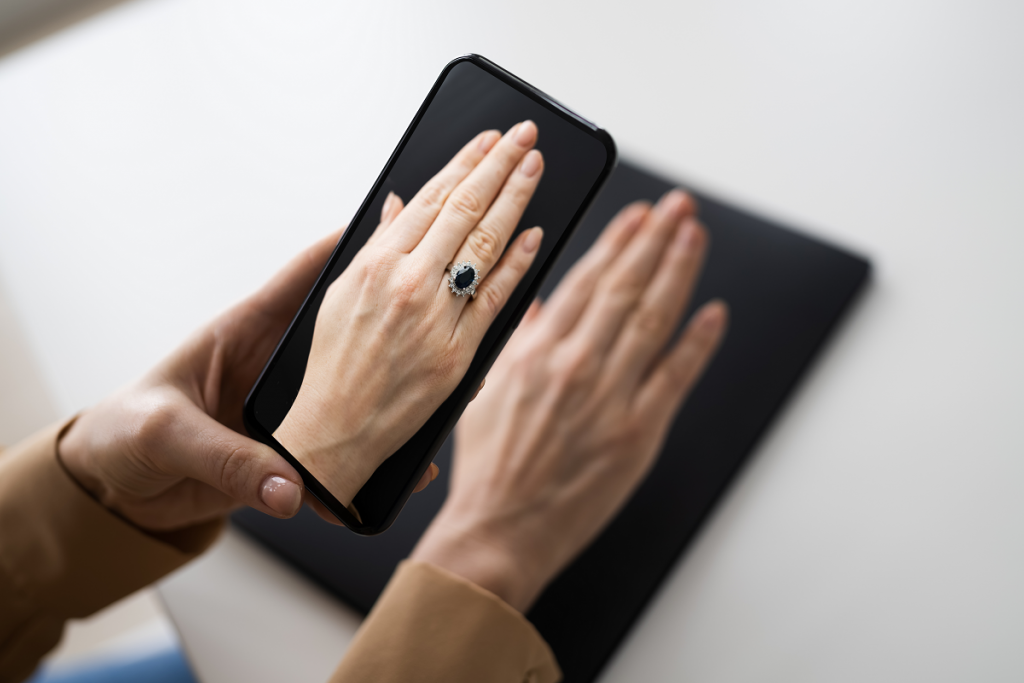
In a more prosaic but certainly informative and interactive way, beauty retailers such as Sephora and Ulta have turned to AR to help customers digitally test beauty products and help in buying decisions. Virtual try-on experiences are an excellent use case for AR in retail heightened by COVID and the increased focus on hygiene. If customers can’t physically test makeup products on their skin, then AR has got to be the next best alternative.
Lastly, and as big Snapchat fans at ChargeBox, one of our favourite examples of utilising AR technology is Burberry’s partnership with Snapchat to promote their Animal Kingdom pop-ups celebrating signature bags and accessories. Burberry has also partnered with Wildlife Works to make the pop-ups carbon neutral. Customers scan Snapcodes for the wildlife around them to come to life, along with informative content about sustainability and conservation. Snapchatters can then create their own content and share it with their network.
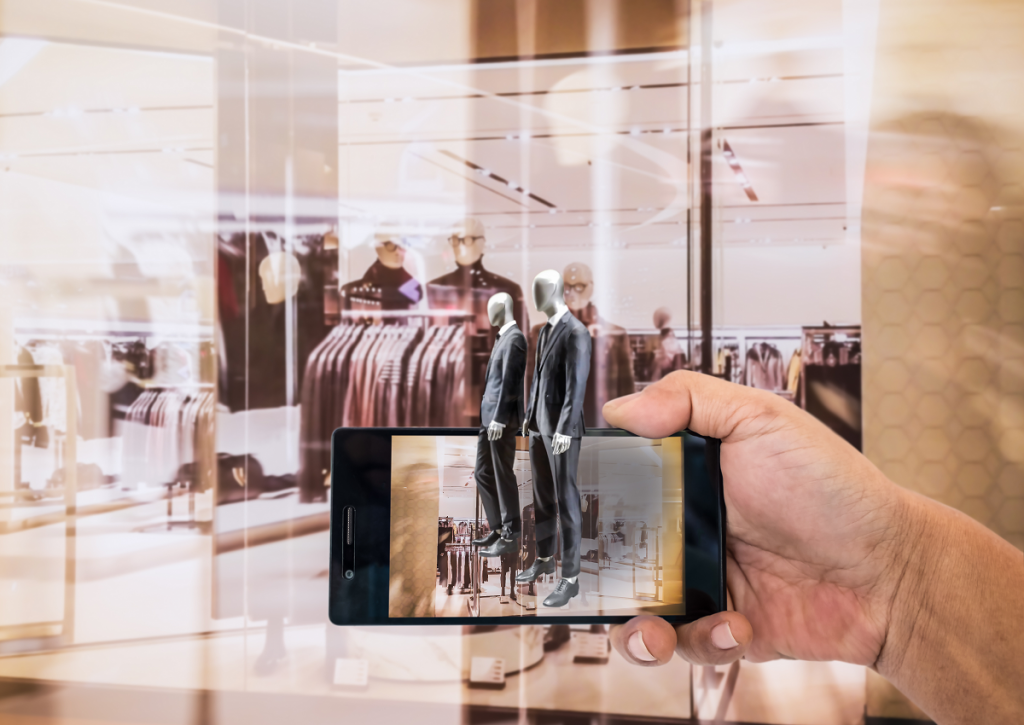
As these examples demonstrate, the smartphone is the centre of a consumer’s universe to enable these exciting experiences, which will be used in a multitude of ways to heighten the senses, drive engagement and improve the shopping experience in-store. Using their phones, consumers can shop and engage everywhere they go. In response, retailers must operate smart stores that can anticipate, sense and interact with customers everywhere they go — inside and outside of the store.
So until the time we are able to be treated to holographic wine producers in their Burgundy vineyards or a craftsman of handmade shoes in their studio we’re excited to see how the use of AR develops in retail, are you?
The ChargeBox Story
Since 2005, ChargeBox has led the way in providing secure out-of-home charging for mobile devices. We are the experts in helping companies keep their customers charged and connected and support mobile technology’s new demands.
Our clients benefit by improving customer satisfaction and loyalty, increasing footfall and spend while ensuring their customers can always use their smartphone for payments, information, coupons, and critical apps. As a result, customers experience reduced stress and anxiety from low batteries and feel safe in the comfort of knowing they can securely charge mobile devices and stay connected to their loved ones.
Mobile devices are essential to the customer journey and central to brands’ new experiences and technologies. Support your future customer journeys, and don’t let a dwindling phone battery inhibit your customers from embracing change.
ChargeBox launches new national outdoor media concept to capitalise on the 768m annual shopping visits made to the UK’s largest shopping centres
ChargeBox, the out-of-home mobile device charging specialist, has today launched a new concept in sponsored outdoor advertising for brands that want to reach the millions of people visiting the UK’s largest and busiest shopping centres.
The launch comes as the company announces that ChargeBox has charged over 37 million devices world-wide, keeping people connected at major retail outlets, transport hubs, sporting events, festivals, exhibitions and more.

As part of a one-year sponsorship deal, companies will be able to exclusively wrap 126 ‘lock and leave’ ChargeBox mobile device charging stations in 41 of the UK’s largest and busiest shopping centres with their brand, product or service.
The free-to-use ChargeBox stations at the selected shopping centres have already delivered more than 11 million charges. With an average charge lasting 21 minutes, ChargeBox has added at least an extra 3.85 million hours of customer dwell time across the centres.
The stations are permanently located at centres owned by Westfield, British Land, CBRE, Hammerson, Intu and Land Securities and offer a perfect way to blend advertising and sponsorship in a way not seen before. ChargeBox units can be wrapped to a brand’s exact requirements and customised so that shoppers see tailor-made messaging on the vinyl wraps. The wraps can be changed as necessary, so they are seasonal or tie in with other major promotions or product launches the brand is running.
The digital screens on the units can also be used to promote offers and display promotions or QR codes and can be updated as often as the brand likes, with the option to capture information with simple research questions.

This unique concept gives brands an opportunity to combine the benefits of digital outdoor media with a way to deliver experiential marketing in a very unique way, explains Justin Stark, Director, at ChargeBox: “Studies at Intu Lakeside* show that 76% of shoppers admit that they feel anxious if they can’t use their phone and that for 61% of them the option to have access to a ‘lock and leave’ ChargeBox influences their decision to visit the centre.
“What’s more for 94% of Intu shoppers, using the charging service enhances their shopping experience. 56% will spend more time and money at the centre as a result of using the ChargeBox stations, over a third buy more, and almost a fifth will spend time eating and drinking in the shopping centre.”
“Now brands can exclusively associate themselves with an established well-loved service, and be recognised as the brand that is delivering the ‘feel-good’ feeling that comes from our free charging service. It makes their brand engaging and useful to shoppers in a way that other advertising and sponsorship deals can’t. Plus, they can further leverage their investment by running promotions on the ChargeBox screens that are relevant to the types of shoppers visiting the centre throughout the day or week.”

Justin adds that the opportunity with ChargeBox could grow further across their other other sectors, which include transport, healthcare and education: “It’s a unique opportunity for a brand to effectively own public charging in the UK.”
Take a look at our dedicated retail sponsorship offer.