The Apple Lightning cable is Dead, Long Live the Apple Lightning cable!
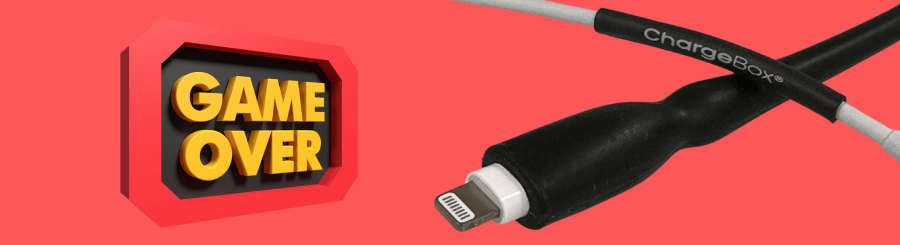
When Phil Schiller, then SVP at Apple, introduced the Lightning cable in 2012 with the launch of the iPhone 5, he said it was “the cable for the next decade”. Sure enough – and having exceeded that with 11 years under its belt – it has been a reliable cable and we can’t imagine using a non-reversible cable any more (even though the EU wanted to standardise around that stupid micro-USB plug). @ChargeBox we have found it to be the best cable (though not without our modification to the junction of cable and head which extended life from 300+ charges to 4,000+; more on that in a future post).
The actual ending is very reliable – far more so than USB-C which has a tendency to break off. You can occasionally get dirt or corrosion on the pins, but this can usually be cleaned off quickly.
With the introduction of USB-C to all iPhone 15 models, it was portrayed as the death knell for Lightning. Of course, in many ways it is – and over future years, will undoubtedly be. But in one clever move, Apple actually made the Lightning cables you already have MORE useful, not less ($29 purchase required!).
Indeed stay with me here while I explain, slightly tongue in cheek, that the Lightning cable has now become the only true Universal cable! There’s even something for Android users too.
If you’re like me, you’ll have quite a few Lightning cables around the house and office – for charging phones, AirPods, older iPads, and even pencils and keyboards. I’ve got quite a few USB-C to Lightning as well as some older USB-A to Lightning.
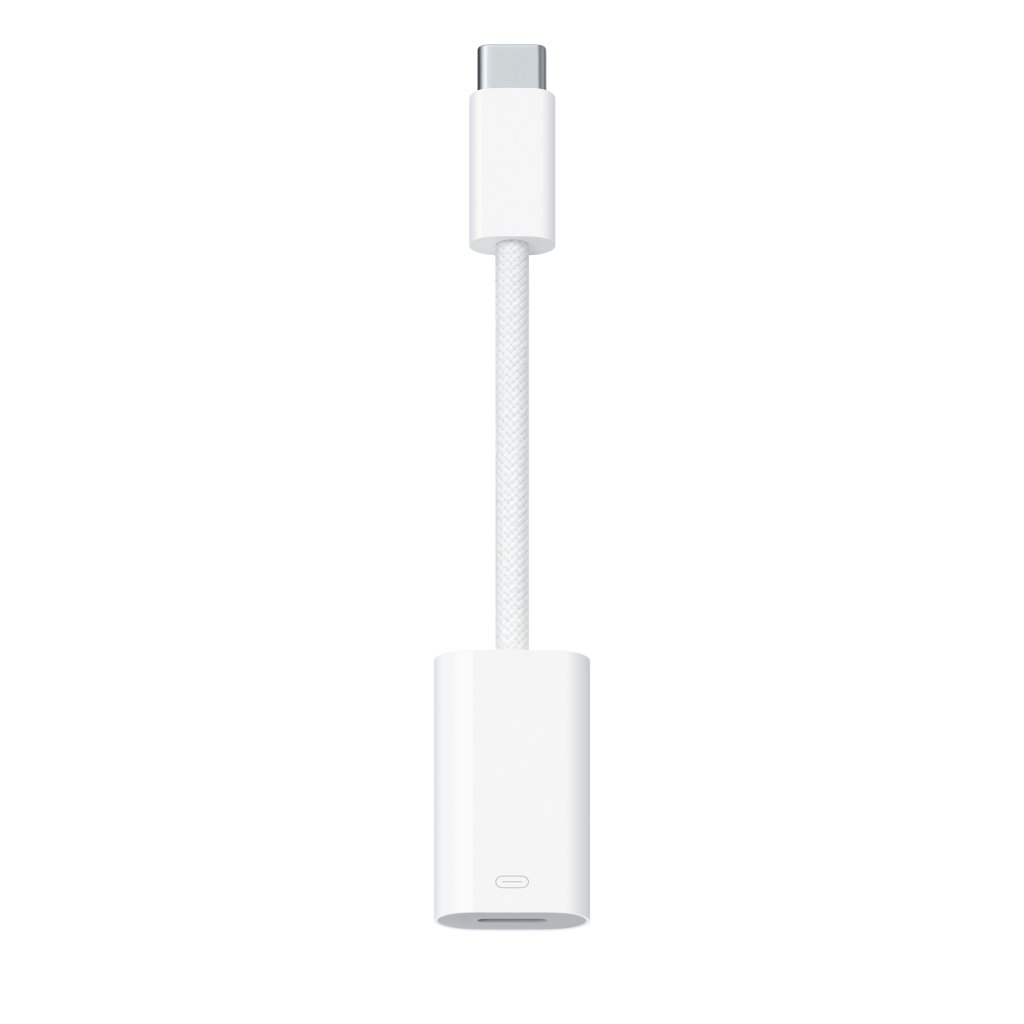
With the release this week of the simple USB-C to Lightning dongle adapter you can now plug in a Lightning cable into a USB-C device. Ostensibly to protect investment in things such as music systems, car adapters etc, this little gem also has the added advantage of allowing you to use Lightning cables to charge not just iPhone 15 models, but also iPad Pros, and, wait for it, ANY recent MacBooks – Air and Pro varieties! (Hang on non-Apple users!)
I picked up my adapter at the local Apple Store yesterday – the person I spoke to didn’t know it existed but they found the stock. It has some useful benefits for our business in field testing which first brought it to my attention. I wondered if it would work with my iPad Pro? And of course, why wouldn’t it work? Indeed using it with my 11.9” M1 iPad Pro I was able to see around 26W charging at 9V with my 96W MacBook Pro charger and USB-C to Lightning cable. I have seen 15V charging when the iPad Pro starts at very low battery with up to 35W, so a limitation here is that I think 27W (9V/3A) is as far as this goes. But that’s almost full speed charging of a modern iPad (note it’s also higher than the 20W charger Apple have typically included if you have access to a higher power USB PD charger such as those with MacBooks).
So, then I thought if it can do this, it might also allow charging my new 15” MacBook Air. And, lo and behold, this also worked. Yes, charging a modern laptop with a Lightning cable! I was able to confirm these details through the “About this Mac” —> System Report —> Power.
It advertised to the MacBook Air as a 28W charger – specifically identifying as the Apple USB-C to Lightning Adapter. (I’m guessing it has a chip in it which probably contributes to the price and which converts the power signalling from Lightning protocol to USB-C). Obviously, it’s not as good as the 70W charger which is optional for this MacBookAir, but a good match for the 35W dual charger in a pinch and not far off the 30W charger included with the base MacBook Air. But, wait. There’s MORE!
Then I started wondering about all the old USB-A adapters out there. Amazingly these work too with 11W recorded into the MacBook Air using a 12W old iPad charger.
So, not only does this adapter allow you to continue using your Lightning cables with new phones, it also allows you to charge ANY other Apple USB-C devices with almost any USB based charger and any Lightning cable.
Ironically, Apple’s done more for sustainability with this one action than the EU’s “rule” about USB-C – which by itself is a big initial negative rendering lots of chargers and cables useless without such solutions.
If you had to take just one cable with you for all your Apple gear, the answer may turn out to be Lightning!
If you’re not one of the 1 billion+ Apple users, how does this help YOU?
Well, for Android users – though I haven’t tested this – it should also allow you to use Lightning cables to charge Android phones – including providing pretty good USB PowerDelivery charge to 27W. So, a cable for every situation! Right now, the only true Universal cable. How ironic, EU? But very much in-tune with Apple’s sustainability push at the announcement event.
Here’s a handy summary of what you can do:
- You’ll need the Apple USB-C to Lightning adapter for this £29/$29 at the Apple Store. You plug a Lightning cable INTO the adapter and then plug the adapter INTO a USB-C device.
- The faster the charger you use, the faster the charging experience, but any charger above 30W is not going to help any further
- If you’ve forgotten the USB-C to USB-C cable that came with your new iPhone15, you can charge with this setup at similar speeds to iPhone 14 models.
- You can charge a USB-C iPad using this setup at a good speed (depending on charger).
- You can charge any USB-C based MacBook using this setup at a decent speed (MacBook Air models and using a 30W charger) or an acceptable speed (MacBook Pro models). In a pinch even a USB-A charger and USB-A Lightning cable will charge these devices up but over a much longer period (USB-A limits of 12W are an absolute maximum). But this would be ok in an overnight situation.
- You should be able to charge almost any Android phone that has a USB-C input using this setup and with approximately 0-50% charge in 30 minutes using a 20W (or ideally 30W) charger.
- You should also be able to charge larger USB-C based tablets and laptops using this setup, with power dependent upon the charger available (again up to around 27W).
- Of course, this same setup (without the adapter) can continue to charge all of your Apple devices and peripherals.
- Taking the adapter with you (Android or Apple users) allows you to “hijack” any friends Apple Lightning configuration to charge your USB-C based device.
So, this little gem of a dongle is a real get-out-of-jail device for all sorts of situations, and useful for many road warriors to carry around. If you have any other situations you’ve found it useful or think it might be useful, let us know and we can update this post.
Thanks for reading!
What are the risks of public phone charging?

This month the FBI warned that using public charging may put your data at risk but what are the REAL risks of using public phone charging?
ChargeBox has provided secure charging solutions for public use since 2005. We are privileged to partner with many of the world’s best-known retail, education, public transport, healthcare and event organisations.
We have never experienced a breach of our users’ data in all that time with over 55 million charges provided!
So let’s look at what we know about public charging stations and the risks you need to be aware of when using one.
What is Juice-Jacking?
“Juice Jacking” is a cyber-attack where a hacker gains unauthorised access to a device such as a smartphone by compromising the USB port. Once malware is installed on a device, it can perform various malicious actions, such as stealing sensitive data, track user activity, or even give hackers remote access to the device.
OMG, that sounds scary. Does it happen a lot?
No, it doesn’t. It’s unclear how common these attacks are; any instances have not been widely publicised. The risk was first identified in 2011, so it’s not a new threat.
So, the risk of it happening is extremely low?
The risk of ‘Juice Jacking’ is infinitely small. However, your safety and access to essential phone capabilities are at risk if your battery is low or out of power. These risks are far higher than the danger of having your device hacked.
So are public charging solutions safe?
It’s not possible to say, with absolute 100% certainty, that ALL public charging solutions are safe but as with most things in life, it’s up to the individual to make informed decisions.
That makes sense. Can I limit the likelihood of this happening to me?
It’s important to practice good cybersecurity habits. Here’s what we recommend:
- Always keep your device up-to-date with software updates, especially security updates. This is your first level of protection against any form of attack on your device in any situation.
- Once software updates are no longer available due to the age of your device, you should consider getting a newer device.
- If you are using a public charging solution, where are you? If you’re in a location managed by a respectable company, you can expect that company to have procured a safe & secure solution that can’t be tampered with.
- If you’re unsure who is providing a solution, look for a name and a website. Check the origins of the equipment, the company, and its data and device security pledges.
What precautions does ChargeBox take to ensure the safest and most secure charging experience?
- Our charging solutions, including electronics and firmware, are designed and manufactured in the UK. We use our own software to control our solutions with the highest levels of security in mind.
- We are governed by national laws in the countries we operate, and our business depends on our end users having a great experience and our clients who host ChargeBox giving a great experience to their visitors.
- ChargeBox solutions are connected securely to our servers, giving us precise information about operational levels and recording the safety of the charge.
- The charging components and cable endings we use are all securely locked so they are not accessible to third-party agents without evidence of tampering.
Isn’t this all a storm in a teacup? Surely the FBI has got more significant cybersecurity concerns to deal with?
Yes! It distracts from device and data safety dangers for which the FBI has been notably absent – namely, the sophisticated malware attacks aided by systems such as Pegasus and others.
Finally, out of interest, what data does ChargeBox access?
Our users’ data privacy is a fundamental aspect of our business model and company ethics. For complete details of your data privacy with any interactions with our stations or our company please visit:
https://www.chargebox.com/your-data-privacy-with-chargebox/
Thanks for reading!
A Blaggers guide to Fast Charge

Your questions answered.
All iPhones, since iPhone 8, and most Samsung or Google phones, have the latest USB PD Fast Charge standard in their hardware. But what is Fast Charging, and why should you care?
What is Fast Charging?
The technical name is USB 3.1 Power Delivery. The people-friendly term is “Fast Charge”, meaning you can charge your device at speeds up to 100W. In short, you can receive up to 50% phone charge in just 30 minutes!
So, if you’re stuck at an airport and thinking, “Yikes! I’m going to run out of battery before retrieving my electronic boarding pass!” – you’d be in luck if you had Fast Charging nearby, as you could get a 10% battery charge in about 5 minutes!
BUT unfortunately, public spaces are still behind the times in providing Fast Charging and most are yet to offer a reliable charging solution at all.
Do I need any specific equipment for Fast Charge?
Fast charge requires three components – a compatible phone/tablet/laptop or other devices, a charger that supports USB Fast Charge, and a compatible cable. The cable will need to have USB-C at least on the charger end and USB-C or Apple Lightning at the device end. Your device will need a Fast Charge system or a USB-C socket branded as Fast Charge for you to use your own cable at public charging solutions.
Can devices with Micro-USB use Fast Charge?
No, only devices with USB-C or Apple devices since 2017 with Lightning can use Fast Charge.
Isn’t wireless charging quick and better?
Wireless requires you to place your phone precisely on a wireless charging pad to get the best performance unless you use something like Apple’s MagSafe wireless charger. Fast Charge cabled charging is still 2-4 times faster and is more reliable. Wireless is better than nothing and fine for overnight charging, but not ideal for public charging when you want maximum charge in a short timeframe.
Is Fast Charge safe?
All modern devices control the power input to suit the devices’ battery characteristics. Manufacturer testing ensures the device takes the right amount of power at different battery charge levels to maximise the safe charge rate while maintaining long-term battery health. When phones go beyond 80-90% charge, they charge much more slowly, as this is when the phone will deliberately slow down the charge rate to protect battery longevity.
Can you only Fast Charge phones?
Many tablets (including all newer iPad models) support a higher level of fast charging. For example, iPads may use up to 30W, three times faster than the old base charger in the box or 1.5 times faster than the charger that ships with the iPad Pro. Of course, many laptops also support Fast Charging using USB-C cables.
I don’t have one of the big brand handsets, but I thought I already had Fast Charge.
You might do if it’s a less well-known Chinese brand, but it’s likely not using the international standard set by the USB Implementers Forum. Unfortunately, this means you will not benefit from public Fast Charging systems, and the technology’s proprietary nature might not hit all the safety standards.
So where could I charge my phone in a hurry when I’m out and about?
Look for USB-C plug points and charging stations with Fast Charge installed. Public spaces like shopping centres and airports have charging stations, but very few have adopted this technology. They will need to start investing in it soon because there will be demand from the public. If you find the charging facilities don’t cater for it, then ask for it. In the meantime, all new ChargeBox public charging solutions provide USB PD Fast Charge charging at up to 60W per cable, hugely outperforming any other public charging solutions we’ve encountered globally.
For more information on any of the Fast charge solutions we can offer your business, event or location – simply get in touch. We’d love to hear from you!
The ChargeBox Team
How much energy does a Chargebox consume?

We get asked this question frequently because decision-makers are keen to understand the energy cost of operating a charging service and the sustainability of our products. With recent energy price hikes, it’s an important consideration when planning which type of charging service to install.
The good news is that even a heavily used ChargeBox isn’t going to make much of a difference to your energy bills. This is down to two key factors – first, we’ve chosen very low-power components to keep ChargeBox operational and managed, which means most of the energy used is actually to charge devices. The second factor is that charging a device – even a tablet or laptop – requires surprisingly little energy compared to activities such as boiling a kettle.
Remember also that providing a charging service isn’t necessarily increasing your electricity consumption. For example, if sockets are available to visitors, passengers, customers, staff, etc., they will charge their devices ad-hoc. So, ChargeBox is replacing this usage with a highly efficient and safely managed charging infrastructure. This can also lead to a reduced requirement to provide power sockets with reduced installation, repair, and management costs, resulting in reduced capital and operating expenditure.
Depending on the product, a single Chargebox uses just one 13A socket to power between 3 and 8 simultaneous charges. Multiple units can even use the same single socket if placed close together. So it’s an energy win-win!
Energy usage of ChargeBox Vs Other electrical items
Our largest ChargeBox model is our FAST6 (6-locker) charging station for fast-charging phones and devices. Based on 100 uses daily of 20 minutes average charge, with an average power of 20W – and allowing for the large advertising screen on the unit, here are the following comparisons:
- Boiling a kettle just 5 times in one day consumes more energy and creates more emissions than the FAST6 does in a complete day of operation.
- The electricity used to charge a typical large EV to 100% just ONCE consumes more electricity than 73 ChargeBox FAST6’s in high usage – equivalent to charging 7,300 devices!
- Having just 10 x 10W LED lights (the most efficient ones) on in your office consumes TWICE as much electricity daily as a ChargeBox FAST6 charging 100 devices.
- The average UK driver emits more CO2 in a day than 24 x ChargeBox FAST6 units charging 2,400 devices.
- A single high-power ElectricVehicle supercharger (e.g. at 150kW) uses more electricity in just 21 days than our 300-station UK fleet in a year, which can easily charge up to 5 million devices to 40% battery.
With customers increasingly dependent on their devices, and the reducing dependence on carbon-intensive activities this brings, it’s time for companies to unleash the power of offering a world-class charging service.
Device charging should be an essential part of the customer experience rather than encouraging ad-hoc plug socket hoarding!
Over and Out,
What is Qi2 Wireless Charging?
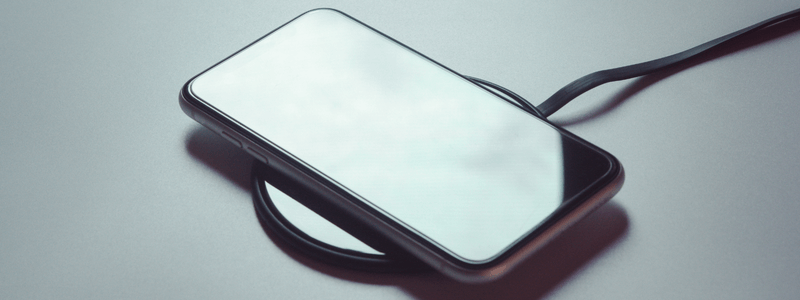
Did you know that wireless charging has been around for ten years already? Time races, and we all adapt to new technology, changing how we maintain our devices without even thinking about it.
But do you charge your phone wirelessly most of the time? Probably not.
That’s because wireless charging is not the best experience compared to a cable, but is that about to change?
The Wireless Power Consortium (WPC) has this month announced an update to Qi wireless charging, revealing that the new Qi2 (pronounced ‘chee two’) will launch later in 2023. Compatible devices will also become available before the year’s end.
Great news for consumers because it helps address the current issues with wireless charging and will ultimately open up the way for broader adoption of wireless charging.
So how long before we don’t need cables at all to charge our phones?
Qi2, based on Apple’s MagSafe technology, uses a series of magnets to create a magnetic connection. A phone perfectly aligned with the charging device will receive improved energy efficiency and faster charging. Result!
For this to make more sense, it helps to understand how wireless charging works.
Inside every wireless charger is a coil of copper wire. When an electric current passes through the coil, it generates a magnetic field. Phones that support wireless charging also include a coil inside their back casing. Placing your phone on a wireless charging pad induces an electric current to the phone’s coil, and then charging begins.
Problems occur as soon as you increase the distance between the two coils. Moving the coils vertically or horizontally away from each other results in a loss of energy and reduced charging speed.
Qi2’s magnets solve this problem by aligning the transmitter and receiver coils almost perfectly. This results in a more consistent charge (you won’t easily knock your phone off the charger) and is less destructive to your phone. This is because any lost energy during wireless charging converts to heat which can impact long-term battery health.
The WPC says that Qi2 will have “faster charging for some devices” and could enable “significant future increases in wireless charging speeds that are safe and energy efficient.” That means more than the current 15-watt maximum of Qi and MagSafe.
The million-dollar question is, how long will it be before we receive the same 25-watt plus charge that a cable can provide?
A dramatic improvement in wireless charging could present the opportunity to eliminate ports from phones completely. That would reduce production costs, free up a tiny bit of valuable space in our phones for something else and improve water resistance.
Exciting times are ahead for phone innovation but much depends on how Qi2 is implemented and the market reaction.
We always believed that Apple® MagSafe was a superior wireless charging technology and that’s why it’s already integrated into all our wireless solutions. Boom!
The ChargeBox Team
Upgrading Your Event Experience With A Phone Charging Station
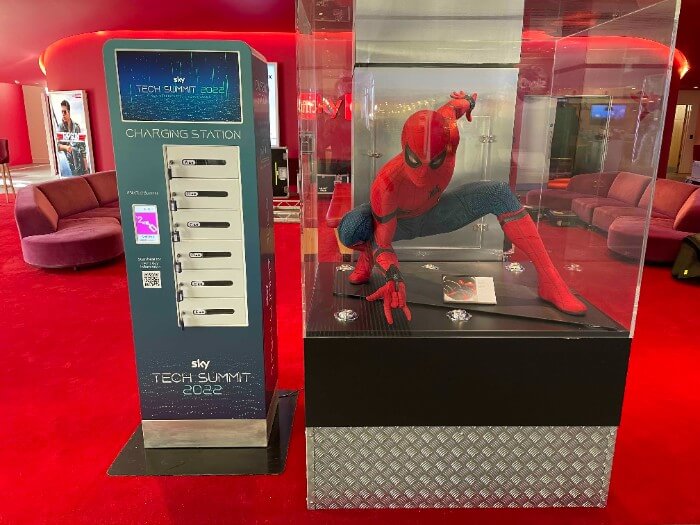
Free phone charging is an essential addition to any event, providing attendees with the opportunity to stay connected and make the most of their experience. Running out of power can cause major anxiety and frustration for guests. When device batteries are low, attendees may become disconnected from the event and ultimately leave before they’ve had a chance to enjoy it fully.
Providing easy access to free charging capabilities creates a feeling of convenience for your guests and enhances their overall experience by removing potential stress or worry about battery life.
Mobile devices have become indispensable tools
Mobile devices have become indispensable tools for staying connected, both in our private lives and in business. They allow attendees to navigate their way around the venue easily with app maps or GPS; they give quick access to tickets, loyalty cards, and other digital passes; they enable event goers to stay up-to-date with live event news, updates and offers; and of course, they let people engage in conversations with their peers by sharing photos, videos and thoughts on social media.
At events, mobile device batteries can run down quickly as attendees take advantage of all the features they offer. If battery levels become too low it can inhibit the full enjoyment of a particular event experience.
Fast Charge is essential for the event experience
Offering Fast Charge at events greatly enhances the experience for many attendees. By incorporating USB 3.1 Power Delivery technology, device batteries can charge up to 2-4 times faster than traditional methods, decreasing wait times and allowing users to spend more time enjoying the event instead of waiting for their phone to charge.
This revolutionary technology can also dramatically increase service availability. By decreasing the amount of time needed to use a charger, more attendees can access the phone charging station and have their phones charged in a shorter period of time. This can be a huge benefit for event organisers who want to maximise the event experience for all of their guests.
Fast Charge is the perfect way to provide a reliable phone charging service and make sure that everyone can power up their device in no time.
A charging station is a great way for sponsors to be involved
Phone charging stations offer a unique solution to both boost event engagement and provide convenience to guests. They can also be used as a platform to strengthen the brand presence of sponsors or partners. They effectively turn phone charging into an immersive experience with customised vinyl wraps and digital screens ensuring that companies remain visible throughout the event.
This can go a long way in creating an unforgettable experience for your guests while offering them an invaluable source of convenience. Allowing companies to take advantage of this valuable service helps to create a halo effect around their brand, further increasing loyalty and improving overall event success.
What’s the right charger for me?
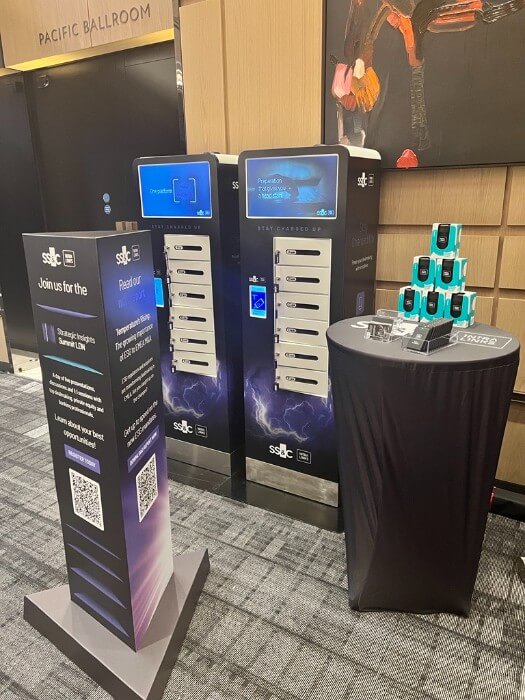
When selecting a solution, there are a number of options to consider. From ‘Lock and Leave’ solutions that allow users to safely leave their mobile phone to charge while they get on with their day, to ‘Stay and Charge’ solutions that enable people to charge their devices while still using them, you’ll have no trouble finding the perfect mobile phone charging for your needs.
What else is important when considering mobile phone charging stations?
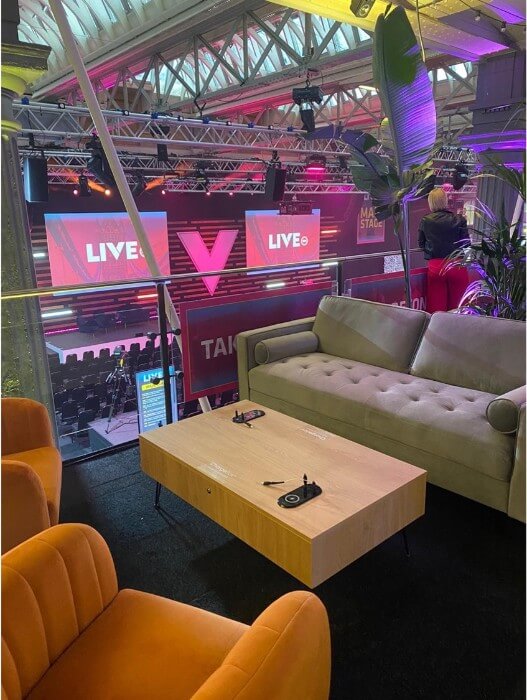
In addition to choosing the right phone charging station for your event, you should also factor in how many are needed and where they should be located. Make sure that charging services are placed near seating or areas of high traffic so attendees can easily access them throughout the event.
Moreover, ensure that these chargers boast reliable security features such as remote management capabilities and fault detection protocols to provide maximum protection for users. With this in mind, selecting the right phone charger will prove invaluable in ensuring a great event experience for your guests and peace of mind for yourself!
Other considerations when choosing charging stations
To ensure that devices are safe, it is important to use phone charging stations manufactured by a reputable company with stringent safety protocols in place. Additionally, phone charging stations should have real-time monitoring systems installed so that potential problems can be identified and dealt with immediately.
Furthermore, services should have multiple layers of encryption in order to safeguard user data from any malicious activity. Finally, having an onsite technician present who is skilled in resolving technical issues related to device charging will help maintain a smooth event experience for event-goers.
Phone charging solutions, an essential service
In conclusion, free phone charging solutions can be a great addition to any event as they provide convenience and peace of mind.
When selecting phone charging solutions for your event, make sure you factor in the type of phone charger needed, where it should be located and the security features that need to be implemented.
Fast-Charge phone chargers are perfect for events requiring shorter wait times and higher service availability. Something to watch out for! Choose reputable companies with stringent safety protocols in place when it comes to device charging where public liability is a consideration.
If you would like help finding the right phone charging solution for your next event, then drop us a message! We’d love to hear more about your vision and help make it a reality.
Chargebox is an accredited living wage employer.

We are delighted to announce that ChargeBox is now an accredited Living Wage Employer!
This means that every member of staff working for ChargeBox earns a real Living Wage. The real Living Wage is higher than the government’s minimum, or National Living Wage, and is an independently calculated hourly rate of pay that is based on the actual cost of living. It is calculated each year and is announced by the Living Wage Foundation as part of Living Wage Week.
Over 11000 organisations, including ChargeBox, voluntarily choose to pay the real Living Wage because we believe that a hard day’s work deserves a fair day’s pay. You can find other organisations that pay the Living Wage here – www.livingwage.org.uk/living-wage-map
This commitment applies to not only directly employed staff but also to our third-party contracted staff. We are really proud of this commitment.
The Living Wage movement has benefited hundreds of thousands of families by enabling them to earn a wage they can live on. You can hear some of their stories here.
If you have any questions about the Living Wage please contact info@livingwage.org.uk
Should mobile phone charging be a free public service?

We all like something for free but what public services do we deserve to get for free and what should we pay for? If you are required to pay to use a toilet or to access WiFi in a public space, it can leave a bad feeling as the expectation is that these services should always be free. But what about public phone charging? Shouldn’t that be a free public service too?
When ChargeBox launched in 2005 the original idea was that people would happily pay less than the price of a cup of coffee to charge their phone. For the first few years, ChargeBox operated as a pay-to-use service. It wasn’t until a major mall operator approached us in 2011 asking for a free-to-use service for their shoppers, that everything changed.
When we launched our free-to-use service usage increased by over 2000% overnight. People love free phone charging!
Now over 95% of our charging locations are free to use.
But what’s right for your location?
Free to Use:
- Increases customer satisfaction and enhances the experience. Adds to your location’s positive brand identity.
- Facilitates charging at scale. More people using the service means that visitors dwell for longer and are likely to be happier and more satisfied by the ease of being able to stay connected.
- Greater ROI. 100 people using a free service will benefit you exponentially more (additional spending & goodwill) than the revenue 5 people will generate for you by paying for phone charging. (In our experience Pay to Use phone charge volume is ~ 5% of Free to Use phone charge volume.
- A service available to all without discrimination. Yes if people are really in need of a phone charge you could argue that they will pay for it. But what about the people who can’t afford it or have to prioritise what is most essential at that time?
- Less staff intervention is required. A paid service adds an additional layer of complexity to providing a service – more can go wrong.
Pay to Use:
- Limits anti-social behaviour. With payment required and an audit trail back to the user it discourages misuse e.g. kids congregating around a free service.
- Will generate a small direct revenue stream in certain locations, typically ones where people can’t or won’t leave easily e.g. hospitals, casinos and theme parks.
- When a location has zero budget it allows them to offer an essential service at little to no cost.
At ChargeBox we offer both Free to Use and Pay to Use services and ultimately the decision on what is best for your location is down to you. What links our free and pay-for services is that they are both the best charging experiences available.
- The fastest available phone charging. Three to four times faster charging than any alternative solutions.
- Simple and intuitive to use with minimal barriers to get charged up!
When you’re paying for a service these factors become even more critical.
Which service would you lean towards as a business owner? We’d love to hear your views.
Team Chargebox
UK airport rule – Passengers need a charged mobile to fly

From 2014, anyone flying from a UK airport has been expected to show that electronic devices in their hand luggage can be switched on, if requested to do so by Security personnel.
How many of us are actually aware of this rule though?
Mobile phones and other electronic devices are a common part of our everyday lives so we don’t think twice about packing them into hand luggage and jetting off.
However, UK airports and airlines require passengers with phones, laptops and tablets in their hand luggage – to be able to switch on their devices and ensure they have enough charge to do so.
Last month was the first time these little known rules really hit the news and yet many of us will still not be aware that “If you cannot turn on your devices when requested by security personnel, they can take it from you…”. In other words your device could be confiscated.
The official government website states on its travel advice pages, “Make sure your electronic devices are charged before you travel…”
The BA website states: “Airport security staff may ask you to turn on electronic or battery-powered devices, such as phones, tablets, e-books and laptops, to demonstrate they function.
If you’re not able to do this, you will NOT be able to take your device with you.”
Whilst not all passengers are stopped and asked to “switch on” their devices, random spot checks may be carried out at some airport security points so, travellers MUST ensure their devices have at least enough power to switch on, if asked to do so.
Stay charged up folks!
The ChargeBox Team
Chargebox packs in a summer of sizzling events.
It’s been a hot busy Summer so far and we wouldn’t have it any other way.
We’re pleased to have been picked to provide charging services at many significant events this summer and it’s not over yet.
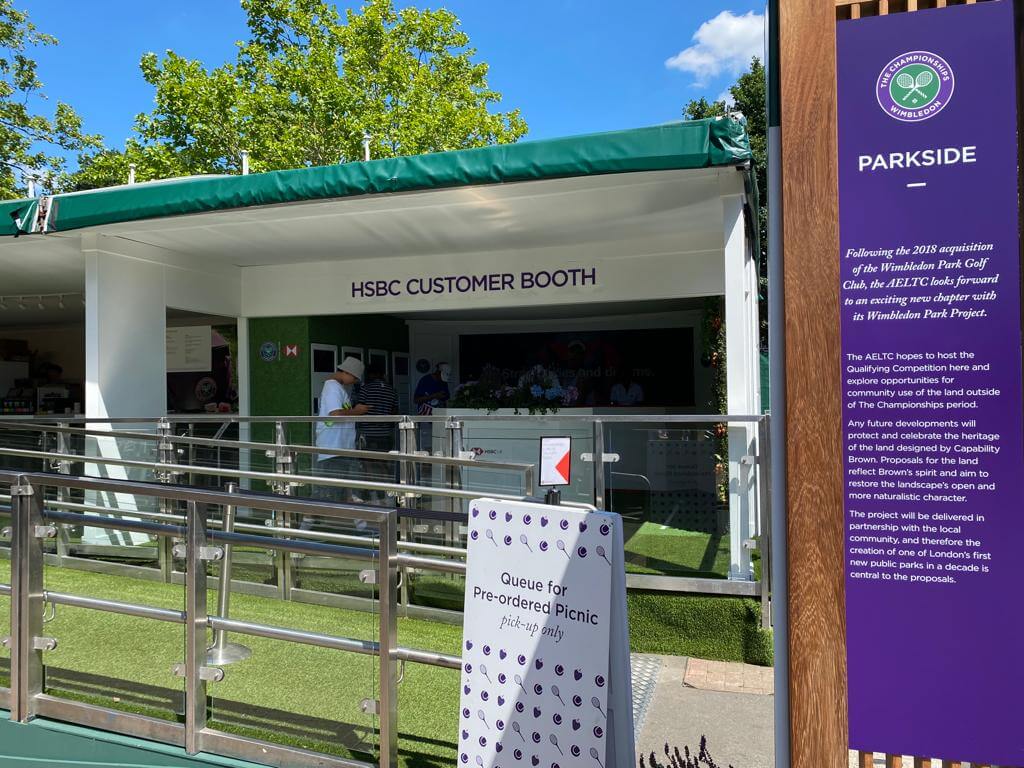
The season kicked off in the traditional style with our annual pilgrimage to SW19. We’re now in our 9th year of working with the tournament and it’s one of our favourite events to attend. HSBC created customer booths with free device charging to entice spectators. Usage of the service was up an incredible 33% this year from last year demonstrating that, like Emma Radacanu, our service proves to be a firm fan favourite.
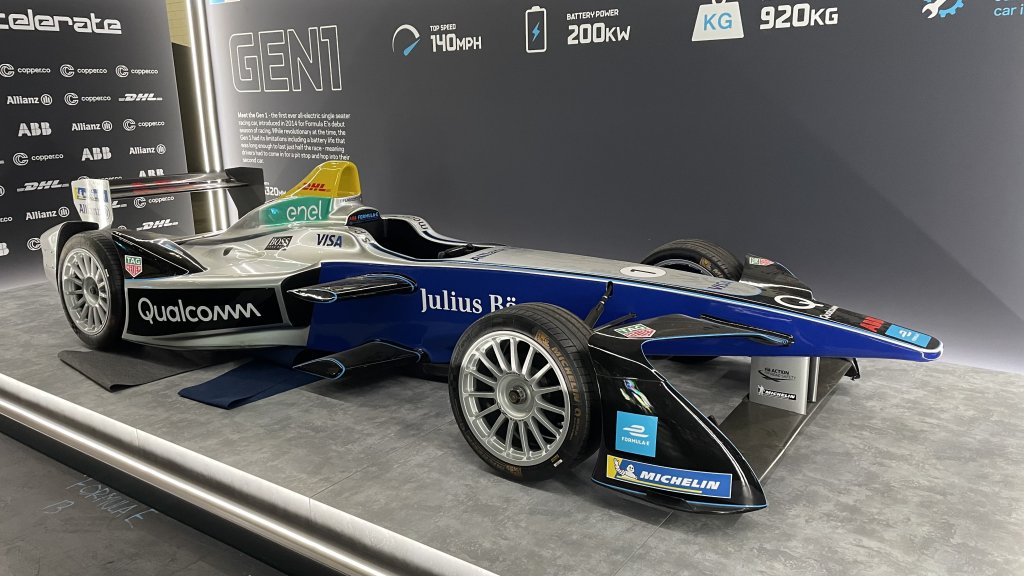
From a much-loved old client to a much-loved new one. A new major sporting event we are delighted to welcome to the fold is Formula E. According to the top driver, Antonio Felix da Costa, the event at Excel London this year was the best yet! Perhaps it was due in part to the fabulous Recharge zone in the Allianz E-Village 😂. Sponsors, enel x way created a perfect area to relax in, with plenty of comfortable seating, low lighting and eight ChargeBox Fast units. With the World’s fastest electric cars on show, this event absolutely had to have the world’s fastest phone charging too!
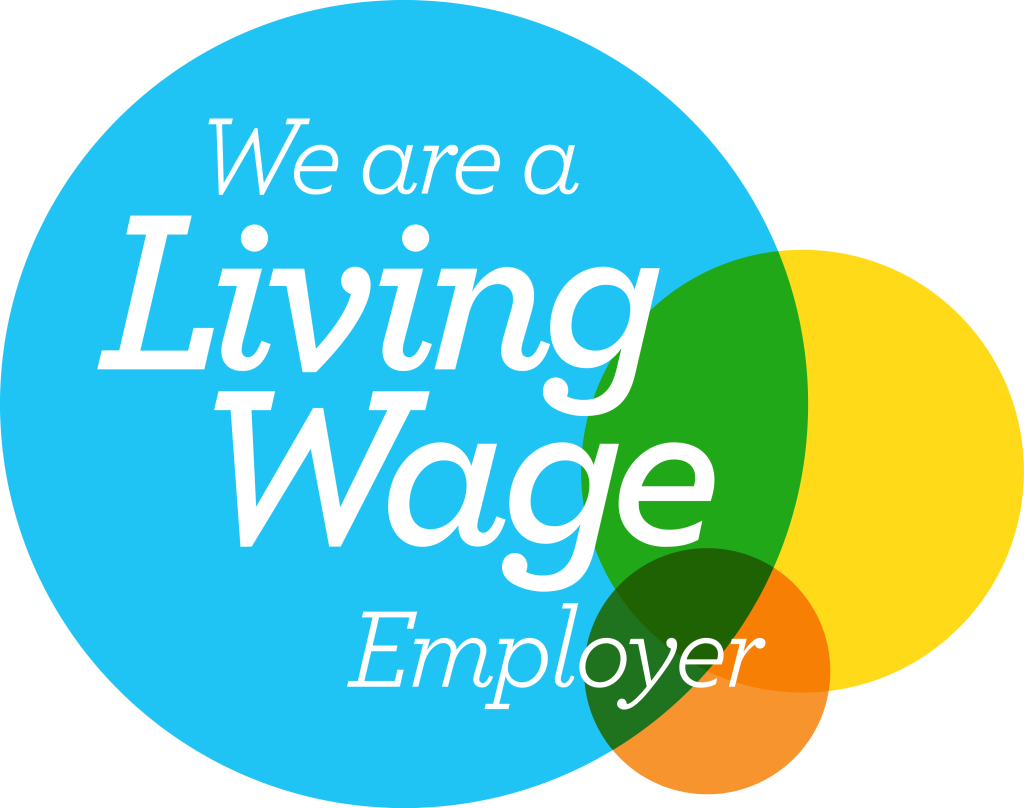
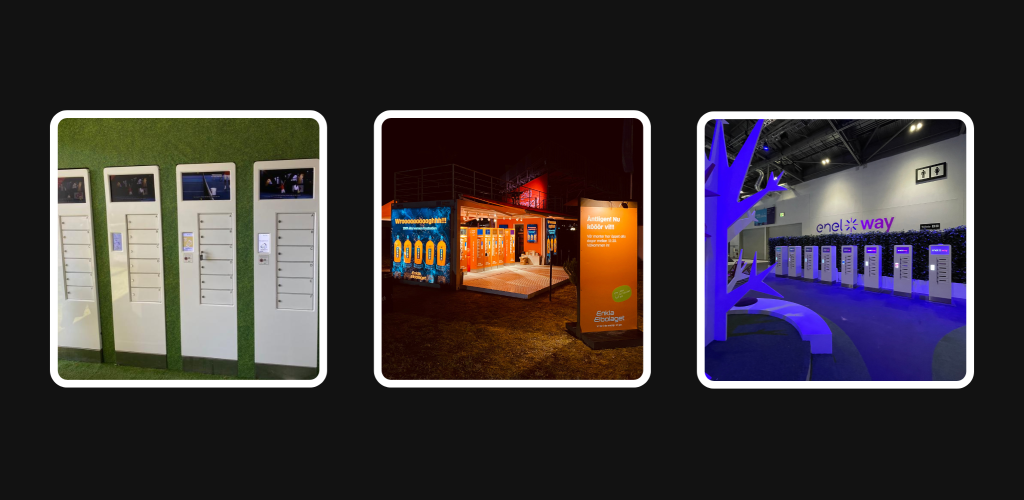
Over in Sweden, our partners at Paraply Production converted a shipping container into a charging zone, in order to provide an essential service at some of Sweden’s biggest music festivals. As part of an activation for utility company Enkla Elbolaget, they upgraded their charging service for 2022. Previously they operated a phone check-in, where staff would take customer phones and plug them in on shelves. This, however, was labour intensive and an organisational headache. ChargeBox’s simple, secure and intuitive lockers are completely self-service so festival goers can independently charge their phones up quickly and easily. Boom!
We’ve also been flying high this summer with some prestigious aviation events, attending both the Air Tattoo and the Farnborough Airshow. Like Wimbledon, the Farnborough Airshow is an event we’ve worked with for many years but post-Covid, we are enormously pleased to be back on the live events scene! Both shows had sponsors supporting their services, these being Raytheon Technologies and Lockheed Martin respectively. Sponsoring charging at events is great for awareness and brands also benefit from the halo effect of providing a useful free service. By securing sponsorship of the service, event partners provide an enhanced experience which negates costs and often makes providing charging, profitable.
Finally a mention of the British Summer Time Festival at Hyde Park. Our services were available to VIP guests of charity supporter Utopia. Just think of the pop royalty who could have used our service – Elton John, Adele, Mick Jagger? Alas, we didn’t get to see any of the gigs ourselves this year but hopefully, we’ll be back again next year to see some of the action!
We’ve had so many great events partners already this summer with more yet to come! Sorry if we didn’t mention your event with us this time.
Get in touch if you’d like us to mention you!
ChargeBox positively impacts the event experience for hundreds of thousands of fans, delegates and attendees. From business conferences to major sporting occasions, we’ll keep your attendees charged and connected.