Mobile Phone Batteries: Their Evolution and Limitations.
In an era where technological innovations seem to know no bounds, one persistent challenge continues to vex smartphone users worldwide: the limitations of mobile phone batteries. Despite the leaps and bounds made in smartphone capabilities, the evolution of battery technology has been, and continues to be, a slower, more incremental journey. In this blog, we’ll explore the advancements and limitations of mobile phone batteries, their technology, and give you some tips on how to prolong battery life that help to liberate us from the tyranny of carrying chargers and charging cables.
The Evolution of Mobile Phone Batteries:
Mobile phone batteries have come a long way since the early days of bulky devices with limited endurance. The introduction of Lithium-ion batteries in the 1990s revolutionised the industry, offering higher energy density and longer-lasting power. However, while smartphones have evolved into sleek, multifunctional devices, battery technology still needs to catch up!
Advancements and Limitations:
While some smartphones boast impressive battery life, such as the Apple iPhone 15 Pro Max, Samsung Galaxy S24 Ultra, and Google Pixel 8 Pro, the reality is that most devices still require daily charging. Despite incremental improvements in battery longevity and efficiency, the fundamental limitations of Lithium-ion technology persist.
Why Batteries Lag Behind:
The disparity between smartphone advancements and battery capabilities can be attributed to several factors. Firstly, the demand for slimmer, lighter devices conflicts with the need for larger, more powerful batteries. Consumers prioritise sleek designs over extended battery life, leading manufacturers to prioritise form factor over function.
Additionally, the pace of battery technology development is inherently slower than that of other smartphone components. While processors, cameras, and displays undergo rapid advancements, battery technology faces inherent challenges such as energy density, safety concerns, and cost-effectiveness.
Mobile phone batteries rely on chemical reactions to store and release energy, making their advancements inherently more challenging compared to the physics-driven developments of other device components. While electronics progress swiftly due to advancements in physics, battery technology faces huge complexities in optimising chemical compositions and reactions, leading to slower progress and incremental improvements over time.
Future Developments:
Technology companies are actively exploring new avenues for battery innovation despite these challenges. Solid-state batteries, which utilise solid electrolytes instead of liquid ones, hold promise for higher energy density, faster charging, and enhanced safety. Companies like Tesla, Samsung, and Toyota are investing heavily in solid-state battery research, aiming to revolutionise energy storage across various industries.
Furthermore, advancements in materials science, such as the integration of lithium metal into battery designs, offer potential breakthroughs in energy density and longevity. Companies like Quantumscape are at the forefront of developing next-generation batteries based on lithium metal technology, paving the way for significant advancements in mobile phone batteries.
Tips for Prolonging Battery Life:
While we await the arrival of next-generation battery technologies, there are steps we can take to maximise the performance and longevity of our current mobile phone batteries:
- Optimise Settings: Adjust the display brightness, and enable power-saving modes to reduce battery consumption. Don’t wait for 20% level before low power mode is offered to go into it if you’re on a long day. There is some loss of features/notifications of course, but usually not much. See here https://support.apple.com/en-gb/HT205234
- Manage Charging Habits: Avoid frequent deep discharges and opt for partial charging whenever possible to minimise stress on the battery. The sweet spot is between about 20-80% charge. Newer iPhones for example let you set 80% as the maximum battery charge level which is good – unless you’re on a long day in which case turn it off for that day.
- Avoid Extreme Temperatures: Extreme heat or cold exposure can degrade battery health, so keep your phone in moderate environments. When in the car, don’t have it in full sun, or next to vents putting out hot air.
- Use Original Chargers: Stick to genuine certified chargers and cables provided by the manufacturer to ensure compatibility and safe charging.
- Consider Battery Replacements: If your smartphone’s battery performance significantly deteriorates over time, consider replacing the battery to restore optimal performance. Your device should tell you about the battery condition and its capacity. You can expect some deterioration after between 500-1000 charge cycles, with more after that level. 3+ year-old devices may well benefit, though if carefully managed, can give much longer life.
- Fast-charging technologies often incorporate features such as temperature management and voltage regulation to minimise stress on the battery, helping to prolong its lifespan.
Conclusion:
While mobile phone batteries may lag behind the rapid pace of smartphone advancements, ongoing research and development efforts offer hope for a future where battery life ceases to be a daily concern. By embracing emerging technologies and adopting prudent battery management practices, we can free ourselves from the shackles of charging cables and enjoy uninterrupted connectivity on our smartphones. And when you consider that the average person checks their phone 150 times a day (that’s once every 6 minutes!), our hunger for battery juice than never depletes, is only going to increase.
It might not be long before we can see the prototypes for a more powerful, kinetic charging system that harnesses motion or mechanical energy to generate the electricity needed to power a smartphone. Exercising to charge up all round?
A Blaggers guide to Fast Charge

Your questions answered.
All iPhones, since iPhone 8, and most Samsung or Google phones, have the latest USB PD Fast Charge standard in their hardware. But what is Fast Charging, and why should you care?
What is Fast Charging?
The technical name is USB 3.1 Power Delivery. The people-friendly term is “Fast Charge”, meaning you can charge your device at speeds up to 100W. In short, you can receive up to 50% phone charge in just 30 minutes!
So, if you’re stuck at an airport and thinking, “Yikes! I’m going to run out of battery before retrieving my electronic boarding pass!” – you’d be in luck if you had Fast Charging nearby, as you could get a 10% battery charge in about 5 minutes!
BUT unfortunately, public spaces are still behind the times in providing Fast Charging and most are yet to offer a reliable charging solution at all.
Do I need any specific equipment for Fast Charge?
Fast charge requires three components – a compatible phone/tablet/laptop or other devices, a charger that supports USB Fast Charge, and a compatible cable. The cable will need to have USB-C at least on the charger end and USB-C or Apple Lightning at the device end. Your device will need a Fast Charge system or a USB-C socket branded as Fast Charge for you to use your own cable at public charging solutions.
Can devices with Micro-USB use Fast Charge?
No, only devices with USB-C or Apple devices since 2017 with Lightning can use Fast Charge.
Isn’t wireless charging quick and better?
Wireless requires you to place your phone precisely on a wireless charging pad to get the best performance unless you use something like Apple’s MagSafe wireless charger. Fast Charge cabled charging is still 2-4 times faster and is more reliable. Wireless is better than nothing and fine for overnight charging, but not ideal for public charging when you want maximum charge in a short timeframe.
Is Fast Charge safe?
All modern devices control the power input to suit the devices’ battery characteristics. Manufacturer testing ensures the device takes the right amount of power at different battery charge levels to maximise the safe charge rate while maintaining long-term battery health. When phones go beyond 80-90% charge, they charge much more slowly, as this is when the phone will deliberately slow down the charge rate to protect battery longevity.
Can you only Fast Charge phones?
Many tablets (including all newer iPad models) support a higher level of fast charging. For example, iPads may use up to 30W, three times faster than the old base charger in the box or 1.5 times faster than the charger that ships with the iPad Pro. Of course, many laptops also support Fast Charging using USB-C cables.
I don’t have one of the big brand handsets, but I thought I already had Fast Charge.
You might do if it’s a less well-known Chinese brand, but it’s likely not using the international standard set by the USB Implementers Forum. Unfortunately, this means you will not benefit from public Fast Charging systems, and the technology’s proprietary nature might not hit all the safety standards.
So where could I charge my phone in a hurry when I’m out and about?
Look for USB-C plug points and charging stations with Fast Charge installed. Public spaces like shopping centres and airports have charging stations, but very few have adopted this technology. They will need to start investing in it soon because there will be demand from the public. If you find the charging facilities don’t cater for it, then ask for it. In the meantime, all new ChargeBox public charging solutions provide USB PD Fast Charge charging at up to 60W per cable, hugely outperforming any other public charging solutions we’ve encountered globally.
For more information on any of the Fast charge solutions we can offer your business, event or location – simply get in touch. We’d love to hear from you!
The ChargeBox Team
How much energy does a Chargebox consume?

We get asked this question frequently because decision-makers are keen to understand the energy cost of operating a charging service and the sustainability of our products. With recent energy price hikes, it’s an important consideration when planning which type of charging service to install.
The good news is that even a heavily used ChargeBox isn’t going to make much of a difference to your energy bills. This is down to two key factors – first, we’ve chosen very low-power components to keep ChargeBox operational and managed, which means most of the energy used is actually to charge devices. The second factor is that charging a device – even a tablet or laptop – requires surprisingly little energy compared to activities such as boiling a kettle.
Remember also that providing a charging service isn’t necessarily increasing your electricity consumption. For example, if sockets are available to visitors, passengers, customers, staff, etc., they will charge their devices ad-hoc. So, ChargeBox is replacing this usage with a highly efficient and safely managed charging infrastructure. This can also lead to a reduced requirement to provide power sockets with reduced installation, repair, and management costs, resulting in reduced capital and operating expenditure.
Depending on the product, a single Chargebox uses just one 13A socket to power between 3 and 8 simultaneous charges. Multiple units can even use the same single socket if placed close together. So it’s an energy win-win!
Energy usage of ChargeBox Vs Other electrical items
Our largest ChargeBox model is our FAST6 (6-locker) charging station for fast-charging phones and devices. Based on 100 uses daily of 20 minutes average charge, with an average power of 20W – and allowing for the large advertising screen on the unit, here are the following comparisons:
- Boiling a kettle just 5 times in one day consumes more energy and creates more emissions than the FAST6 does in a complete day of operation.
- The electricity used to charge a typical large EV to 100% just ONCE consumes more electricity than 73 ChargeBox FAST6’s in high usage – equivalent to charging 7,300 devices!
- Having just 10 x 10W LED lights (the most efficient ones) on in your office consumes TWICE as much electricity daily as a ChargeBox FAST6 charging 100 devices.
- The average UK driver emits more CO2 in a day than 24 x ChargeBox FAST6 units charging 2,400 devices.
- A single high-power ElectricVehicle supercharger (e.g. at 150kW) uses more electricity in just 21 days than our 300-station UK fleet in a year, which can easily charge up to 5 million devices to 40% battery.
With customers increasingly dependent on their devices, and the reducing dependence on carbon-intensive activities this brings, it’s time for companies to unleash the power of offering a world-class charging service.
Device charging should be an essential part of the customer experience rather than encouraging ad-hoc plug socket hoarding!
Over and Out,
ChargeBox at the NHS – Small Improvements That Make A Big Impact
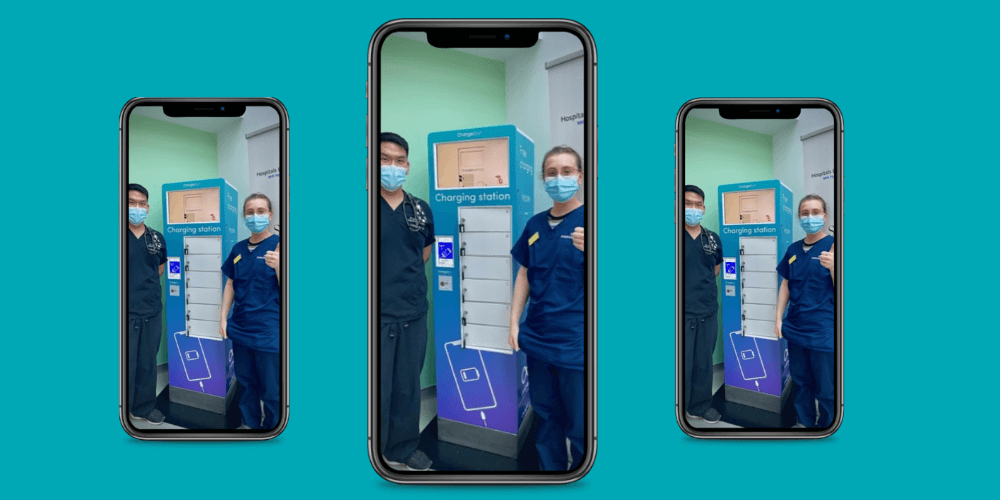
The hospital charity that funded the service tweeted about its arrival. 143 Retweets, 85 Quote Tweets and 1,369 Likes later, here are some of the highlights of those responses:
‘Great idea for the new ED build’. ‘Love this! We’ll definitely look at it’. ‘Great idea, something we can think about for @EDQEH1?’ ‘Look at this fab idea! 😍@StarsAppeal’. ‘Great idea for patients’. ‘Can we do this???’. ‘What an amazing idea! Well done.👍’ ‘What a brilliant idea – do we have one of these in our ED?’ NorthMidNHS. ‘Excellent idea!’ “Love this!’
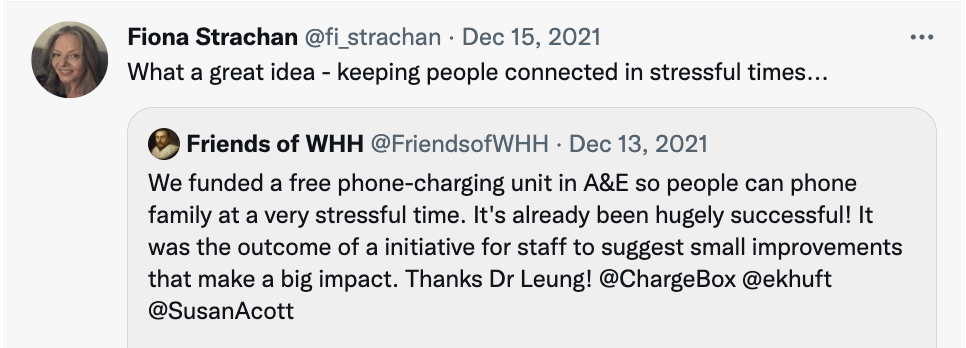

Positive validations from NHS staff continued to flow…
Chief Nursing Officer, Evonne Hunt at Medway NHS Trust said ‘What a brilliant idea!’.
Joel Bonner, Patient Experience Lead at Gloucestershire Hospitals NHS Foundation Trust commented: ‘the sort of thing I had in mind!’ to which Sally Hayes, Deputy Divisional Director Quality & Nursing Medicine said ‘Yep! Saw that last night! Go for it!’

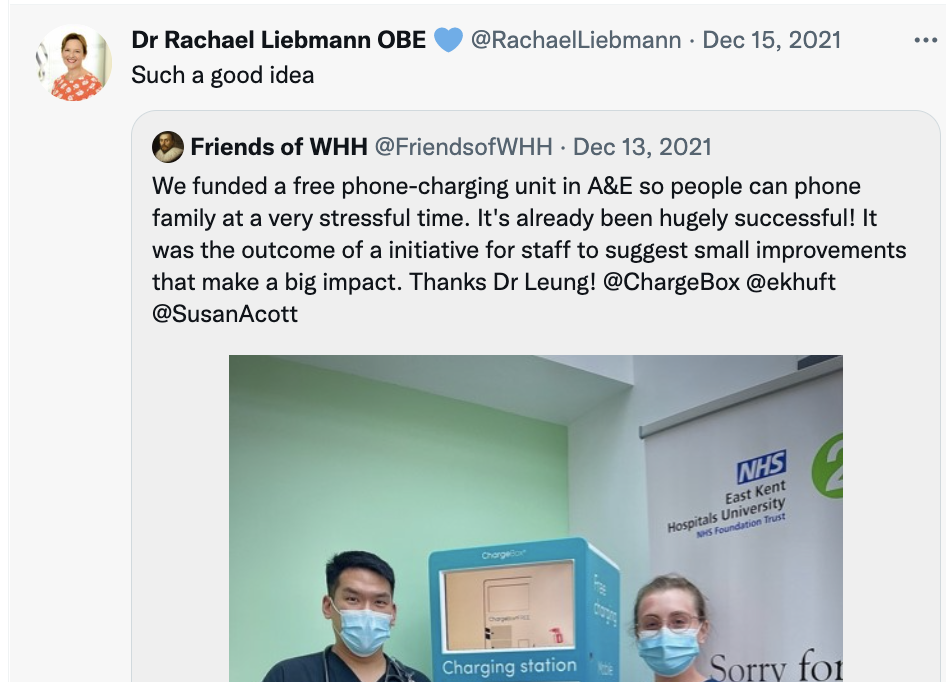
Other comments even made us chuckle as curiosity about the new Chargebox grew. ‘Where do we buy one of these beauties???’ Really, Clare? But thank you 🙏 And Sarah 😂 ’Please can we have one for Christmas?’ ‘How groovy is this!? Yeah, baby!
&tbnid=OQq4MQpfNnO8FM&vet=12ahUKEwjR68OSqIz5AhVSiRoKHaoGA-gQMygAegUIARDiAQ..i&docid=57W0r4TBuHtuoM&w=339&h=293&q=austin%20powers&ved=2ahUKEwjR68OSqIz5AhVSiRoKHaoGA-gQMygAegUIARDiAQ)
But Clare Campion, Interim Director of Nursing & Quality at The Children’s Trust and Registered Nurse Brian Webster summed up best why having charged up, connected devices at hospitals are essential.
‘Fantastic initiative, well done! That will make such a difference to people who are there for far longer than they’d like to be, and left home in a hurry without a charged phone, or spare battery. Will take a lot of anxiety away. 👏’
‘Person centredness. I helped someone today in ICU get their phone and tablet charged and WiFi connected then facilitated a video call with family. They didn’t care (verbally) about all the clinical skills I did all day but for this, they couldn’t thank me enough!’
And patient Douglas Bilton also gave us a valuable review of the service. ‘This is such a great idea. I’ve had to go to A&E 3 times this year and on each, phone charging has been a concern.’
So as you can see, keeping patients’ devices charged is essential. We hear this all the time in our conversations with NHS partners so it’s rewarding to see it stated openly and genuinely for all to see.
About ChargeBox:
ChargeBox is the trusted, safe and secure charging provider at over twenty NHS Trusts because our service will:
Alleviate stress as patients and visitors can stay connected with loved ones, access critical information and stay entertained.
Increase staff productivity as they no longer have to deal with charging requests.
Support the increased volume of mobile devices within the NHS as pagers are phased out.
Reduce the uncontrolled use of sockets which can result in health and safety risks – Estate and Facilities Alert Dec 2018
Tell us about your local hospital – is device charging a service you think is essential these days?.
Fast charging and protecting your smart phone’s battery life.
Do you want to charge your smart phone safely and keep the battery life good for as long as possible?
Are you surprised at how slowly your smart phone appears to charge sometimes?
Are you confused by the different cables and chargers around?
If you answered yes to just one of these, you’ve come to the right place…
Your smart phone’s Lithium-Ion battery is an incredibly sophisticated component that has evolved to supply reliable power for much of the day, safely, and for an extended lifetime of 1,000 charges.
Over those 1,000 charges, your battery will start to deteriorate and not yield the life it had when it was new.
A key way to reduce that degradation is NOT to charge it past 80-90% if you don’t have to and ideally keep it above 10-20%. This may mean charging it twice daily to keep it in that range and skipping overnight charging to 100%.
Like most people, you’ve probably got several chargers you’ve received with smart phone purchases over the years.
If you’re still using the charger that came with a smartphone just a few years ago, you need to change it!
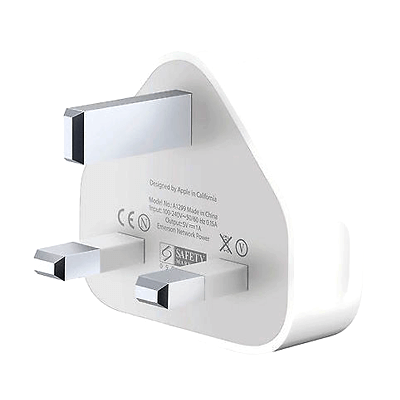
👈 If you are using one of these to charge your iPhone 8 onwards, it’s only providing between 18-30% of the power your smart phone needs.
In other words, your smart phone could be charging up to five times slower than it’s capable of. 😳
Why Battery Size Matters
Smart phones now have 3-4X more battery capacity than just a decade ago. You may not have noticed the change as it has been a gradual change in line with smart phones getting thinner. While some of that capacity provides better battery life, more is used because smartphones now have giant screens and are more power-hungry. What could charge a smart phone a decade ago will only give you a fraction of the power needed now.
To understand if your smartphone is getting a meaningful charge, you should measure it in terms of the % battery boost in a particular timeframe, e.g. 0-50% battery in 30 minutes.
Using an old charger with your new smartphone may take over 2 hours to get a meaningful charge. Of course, that’s not a lot of use when you’ve only got 10 minutes to get out of the house.
So what’s the answer?
Faster charging. The first iteration was QuickCharge from Qualcomm. This allowed slightly quicker charging using the micro-USB cable. However, it was proprietary and generally limited to specific Android devices that used Qualcomm components (by no means all). Plus, it was limited to the inferior micro-USB cable, which breaks easily.
Now USB is leading the way in providing fast charging standards developed and agreed upon by a cross-industry group, including leading vendors such as Apple, Samsung, and Google, as well as chip companies such as Intel and Texas Instruments.
They developed a better cable ending – USB-C – and the next-generation USB charging technology known rather boringly as USB Power Delivery (PD). It’s now considered the only true Fast Charge technology for smart phones, which is also compatible with laptops and tablets.
How does USB PD work in the simplest terms?
Well, it’s actually quite straightforward. Power, measured in Watts, is simply Volts multiplied by Amps. So, with old USB charging, you might have between 5W and 12W of power (at best). But with USB PD, chargers can go all the way to 100W – over 8 times more power or 20x more power than the typical 5W chargers many people still use! (Remember that Apple charger above?)
Most smart phones today charge in the 20W-45W bracket, so a PD charger offering anywhere from 20W to 45W is good enough. But if you use a higher power charger made for a larger laptop or tablet, that’s even better. Of course, you don’t need a 100W USB PD charger, but neither will it do any harm.
USB PD continues to develop and is being stretched to 240W of power in the next generation. This could permit e-bike/e-scooter or power tool batteries to be charged while also permitting charging some of the largest laptops or powering small desktops.
Qualcomm has adopted USB PD in its QuickCharge4 standard, meaning devices supporting QC4 will also support USB PD chargers. In addition, Apple’s Lightning cable (with a USB-C adapter on the charger end) also supports USB PD chargers.
Am I using USB PD Fast Charge today?
If your charger has a USB-C port, it may be USB PD, but not definitively. If you can find the specs, look for USB PD to be mentioned and voltage levels other than 5V (e.g. 9V) and/or power of 18W or more.
If your charger has a USB-A socket, it is definitely NOT a USB PD fast charge charger. And just because your smart phone has a USB-C socket does NOT mean it’s a smart phone capable of USB PD Fast charging.
And finally.
We’ve not discussed loads of geeky terms here, such as Wh, or mAh but it is REALLY useful to understand a very simple relationship. Watts = power. A Wh or Watthour is simply the amount of power that can be sustained for one hour – so you can be a powerful runner with a quick sprint, but a one-hour run is the power you can maintain for one hour – “energy”.
In electrical terms, there are two key components that make up power; Volts and Current (amps). Multiply the two, and you get the Watts. Maintain that for one hour and you get Watthours. So, 5V * 1A = 5 Watts. Maintain that for 1 hour and you get 5Wh of energy – a smartphone that runs at 1Wh will get you 5 hours of usage.
So there it is. Fast charging in a nutshell.