One Charging Cable – A Great Idea?

On the surface, what is there not to like? Well, quite a lot actually.
Bureaucrats and politicians interfering in technology innovation is never a good thing, and this is no exception.
Have we suddenly reached peak cable where no further innovation is necessary?
There are some reasons for having a universal cable – to reduce e-Waste, extend the life of a charging system and simplify things for consumers. But, if the result stifles innovation, these small benefits are far outweighed.
The EU attempted this several years ago when the common cable type was Micro-USB. Was this the ultimate cable? It certainly wasn’t. For starters, it has a non-reversible end which causes damage to cables and devices as users struggle to insert it the right way up. Micro-USB continues to limp on but is dramatically declining, accounting for less than 10% of the phone charges we deliver.
If Micro-USB had been mandated years ago, we’d be stuck with an inferior solution. We wouldn’t be seeing the increasing number of larger devices that use USB Power Delivery charging, which is impossible with Micro-USB. We’d also be stuck with bad chargers for phones needing alternative chargers around our homes and workplaces for other devices instead of sharing cables.
Forcing such a change will also render equipment useless, potentially creating more e-Waste and further consumer cost. For example, the car industry works on a much slower innovation cycle. If your AV equipment in your brand new car supports your Apple iPhone via Lightning, but that system cannot support your next phone, what will that mean for you and your vehicle?
How can EU politicians judge the limits imposed on technology vendors and prevent us from choosing something else when those vendors are incentivised to make our lives better?
We firmly believe any intervention in this area is bad because it will stifle innovation and potentially productivity by limiting what innovations can be deployed.
Wireless charging doesn’t plug into the phone but requires an alternative connection. If that’s allowed, why not something else? We’d be forcing our devices to have ports that limit waterproofing and dust proofing if it’s not allowed. There may be details in the EU proposals that outline these, but we can’t be sure since the situation is evolving.
If the EU IS determined to mandate something and reduce e-waste, then surely it should be focused on the other two elements of charging:-
- The charger itself has considerably more environmental impact than a cable
- Having a standard protocol such as USB Power Delivery
However, this too requires caution as USB PD covers everything from a 15W charger suitable for small phones to 100W chargers for laptops. Indeed the next version of USB PD will support 240W charging – capable of charging the most power-hungry laptops as well as e-bike batteries, power tool batteries and a whole host of other things.
In summary, the EU should not interfere in areas that have the potential to limit innovation and productivity. But if they have to do anything, then perhaps the focus should be on quality chargers that are safe, reliable and power-efficient and that use a standard charging protocol such as USB-PD. This would be far more beneficial to consumers and the environment alike.
The EU should also lobby the USB Implementers Forum to make sure consumers understand that charger, charging standard, and cable permutations are many – and all impact performance.
Change doesn’t have to happen overnight – but to prevent change altogether would be disastrous.
Our Sustainability Strategy
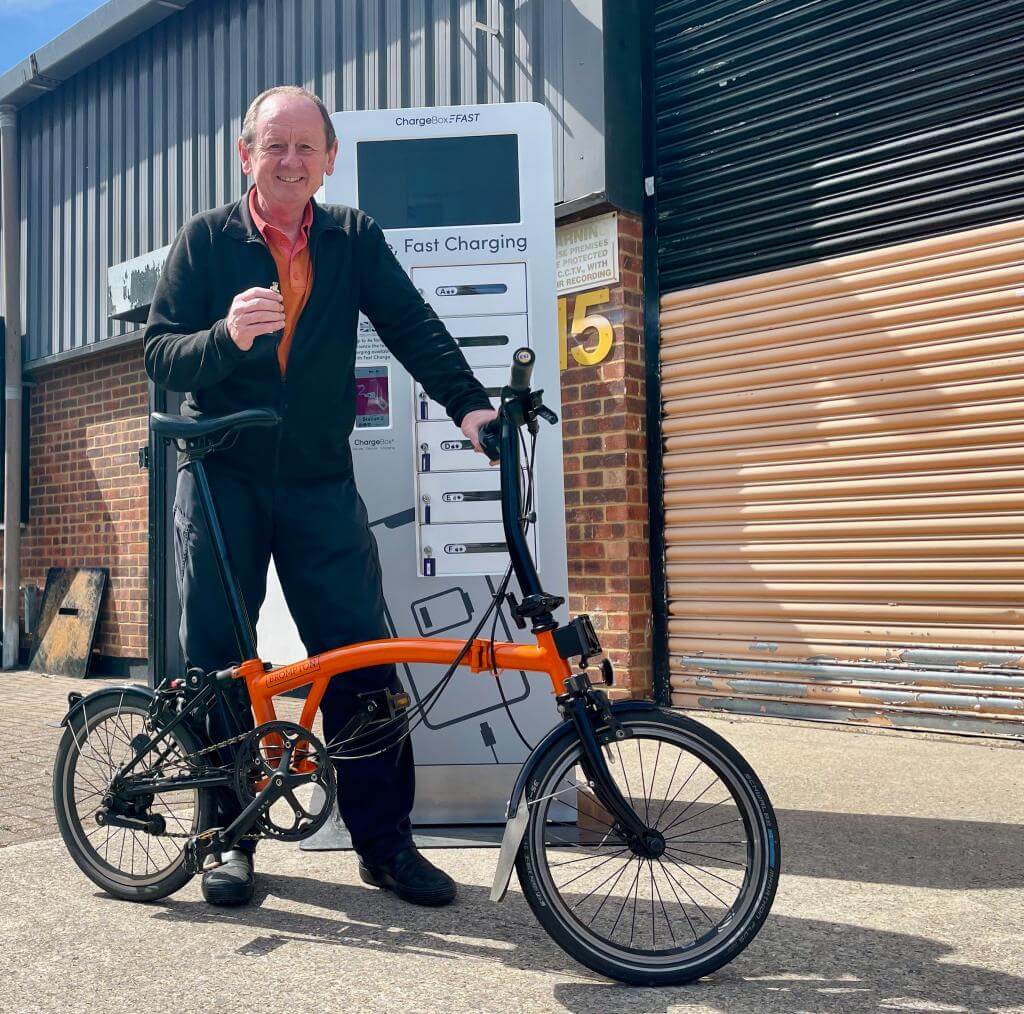
Sustainability and the Environment are dear to us all at ChargeBox. However, these are not just words; we are taking tangible actions to make our company sustainable and make the products and services we provide to our clients sustainable.
In 2021, ChargeBox committed to NetZero by 2030, which can be seen on the SME Climate Hub. Also, in 2021, ChargeBox was part of the first cohort of businesses to go through the BetterFutures+ programme, developed by West London Business, with the backing of the Mayor of London.

The mix of workshops designed by Imperial College Business School, a carbon calculator and a consultancy project focused on embedded carbon inside ChargeBox, has given us an accurate insight into our emissions and those created by our suppliers. As well as those taken on by our clients when they purchase or rent our ChargeBox solutions.

Credit: https://unsplash.com/@nrdoherty
“With the addition of a heat pump, solar thermal hot water, and solar PV, I’ve chosen to make my own dwelling zero carbon and invested in a wind farm to produce 120% of the electricity required – even while purchasing renewable energy. For as long as I can remember, I have cycled to work and back every day.” Ian
We are especially delighted to work with clients committed to NetZero. And we will provide any information and mitigations to you to help you achieve your commitments and interim goals.
Like any business, we have our emissions and waste. However, we have taken significant steps to use renewable energy for our premises and recycle everything we have to dispose of with zero landfill. These efforts really help on our Scope 1 and Scope 2 emissions. We also have a cycle-to-work scheme and encourage our staff to use public transport to support deployed ChargeBox stations.
However, we learned from our BetterFutures+ experience that our biggest challenge is to reduce our Scope 3 emissions – those we do not directly output – as they are emissions of our suppliers and clients as a consequence of providing the service. We estimate these emissions to represent over 93% of total emissions, and so represent a far bigger prize to impact than just our own direct emissions.
To provide the World’s best charging solutions, we have developed great designs and user experiences built around quality materials and leading-edge electronics. Materials (e.g. steel, stainless steel, aluminium) and computer boards, wiring, PCBs etc., all have a sustainability impact and emissions impact. Because we control those designs, we have calculated the impact of embedded carbon at manufacture and lifecycle emissions during use. We can also reduce those emissions through supplier choice, component choice, design changes, and recycling/reuse, making our solutions more sustainable.

Here are the things we’ve already done:
- Since 2019 we have manufactured all of our solutions at a UK factory, minimising long-distance logistics and ensuring control of what goes into every ChargeBox. In addition, our factory has a solar PV system that generates over 0.5MW of electricity – larger than 150 home installations.
- Our primary manufacturer works with UK and European suppliers to source primary metals and is constantly looking at ways to choose lower emissions and more sustainable materials, particularly aluminium produced using renewable energy or newer processes for stainless and mild steel.
- Because of these actions above, we estimate that around 95% by value of components and work to make a ChargeBox is kept within the UK and EU. With competitors often sourced from Asia – often from countries with high carbon electricity generation – this figure is likely the other way around for them. By keeping the value locally we help the UK economy with well-paid jobs, while also being much more in control of emissions during manufacturing. Emissions from long distance transport – usually by high emissions cargo ships are almost totally eliminated. By the time a ChargeBox reaches our warehouse – we’re miles ahead on embedded emissions.
- We have always strived for low-power components. Our Raspberry Pi main computers – also designed and manufactured in the UK – have extremely low power usage. And our other electronics means that when in idle mode and not charging any phones, ChargeBox will use as little as 6W of electricity – less than 1/10th of an old lightbulb. Our larger units with top screens idle at around 22W – still less than 1/3 of a lightbulb. Charging a phone uses comparatively little power, but 1 unit of electricity is enough to charge around 30-40 phones, 15 tablets or 5 laptops*.
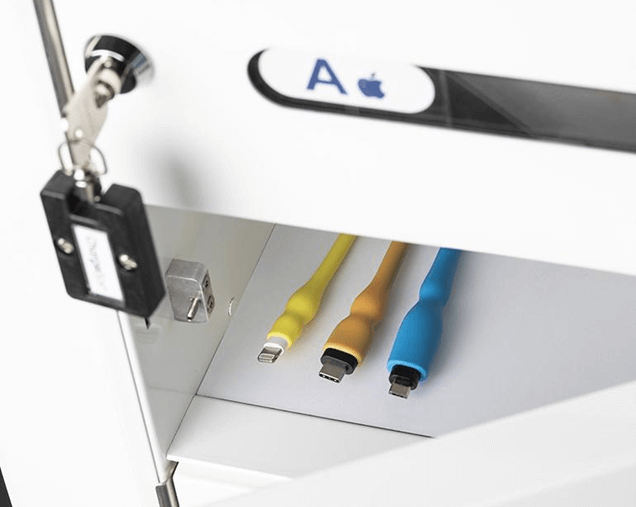
- We are on our 3rd generation of cable enhancement. A typical Apple iPhone cable may only last for 200-400 uses, but our cables last for over 4000 uses. Fewer cable changes saves materials and reduces service visits to fix while also improving availability.
- While our 3rd generation ChargeBox has the best and most reliable design ever, with almost everything changed, we have also recognised that some components from end-of-life solutions are still just as good and can be re-used. We give a lifetime warranty on these components and have reduced the embedded carbon in our latest stations by 15%. We will continue to iterate our designs and choice of materials suppliers to reduce this figure further.
- Our IT services are all cloud-based, and we use a supplier that will be carbon neutral before the end of 2025.
- We continue to work with our primary suppliers to encourage their own NetZero journey.
- We now offer to all our clients who are upgrading or retiring units to responsibly recycle, retest and reuse and can provide appropriate guarantees to clients. You can therefore be sure that metals used in any ChargeBox will be recycled, and electronics and wiring will either be re-used, repurposed, or responsibly disposed of. In addition, we are committed to incremental reductions in the embedded carbon of our solutions over their lifetime. We will also ensure they are not a burden to our clients at end-of-life.
- Many of our solutions are heavy and require complex logistics to ship across the UK or abroad. We outsource much of this to professional logistics and delivery companies. Right now, there are no suitable zero-carbon methods for moving equipment long distances, but we will continue to work with suppliers to adopt such practices when they become available.
- When we do our own deliveries, we are now trying to source lower carbon or zero-carbon transportation. This is easier around our base in London, but zero-emissions logistics for moving our heavy items around even short distances are not there yet. However, with the steps we’ve taken, we estimate that we will use 10% less carbon in our logistics emissions in 2022 over 2019, and we expect these savings to accelerate.
- We use a protective wrap on most ChargeBox solutions for permanent installation or events. This helps extend the unit’s life but is also used for sponsorship and branding. We sourced the most environmentally friendly wrap solution from 3M via a key supplier who is committed to sustainability. We also now do this in-house, eliminating shipping of panels there and back.
We are all on this sustainable journey together. We’ll be sharing regular updates and blogs about our progress. If you’re interested in our journey, follow us on Twitter, LinkedIn and Instagram to see how we’re getting on.
Ian Hobson
Founder & CEO, ChargeBox
* these are considered approximate numbers and can vary significantly between products.
Smart Lock vs PIN
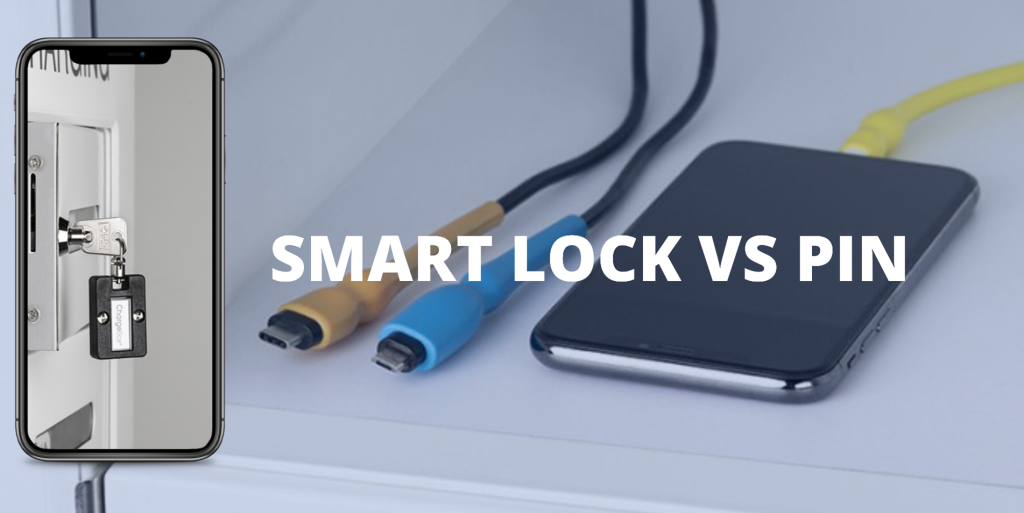
In this digital age, is it surprising to learn that key security still firmly trumps a PIN or a futuristic biometric system?
We patented our smart lock for charging lockers back in 2013, and it is still as relevant and market-leading today.
We thoroughly explored the alternatives in our quest for the ultimate locker security. But even now, in 2022, we still get asked about PIN lockers and how they compare.
To understand the limitations and benefits of a PIN-based system, we built one as a prototype and put it to the test. We trialled it in a Central London location and then sat back to observe usage on the CCTV.
On one occasion, we watched someone using the locker correctly, followed by someone else getting up from a nearby sofa, going to the same locker, typing in the PIN and stealing the device. The phone owner had done nothing wrong but found their device gone through no fault of their own.
This is just one example I hear you say. However, that alone doesn’t make key security better than a PIN. Surely there are ways PIN systems could be as good or better than a key?
We think not. Here are seven rock-solid reasons why key trumps PIN every time.
Security:
- It is pretty easy to see peoples’ keystrokes, especially when they’re unfamiliar with the system and do it slowly. Typically a user-selected PIN must be confirmed, which gives a thief a second opportunity to spot the PIN.
- Even with a six-digit PIN, anyone can remember a sequence of 6 digits. And it’s super-easy for someone standing behind to video a user entering a complex PIN.
- Preventing users from choosing common PINs (e.g. 123456) will reduce successful guesswork. Still, it’s not enough unless you also reduce how many attempts are allowed. This can create another problem, though – locking the genuine user from retrieving their device!
Ease of use:
- It is significantly more time-consuming and tricky for users to create a PIN (that passes the uniqueness test). You can easily spend a few minutes setting up a PIN system – while it’s just a few seconds to use a key. That gives more charging time and means the machine is quickly available for following users.
- What happens if a user forgets their PIN or gets locked out? Staff interventions to release the device and put the locker back in service. Even if this happens with 1 user in 100, it means staff interventions at busy locations every day.
Practicality:
- Without clever design, a PIN system makes it easy for a user to lock an empty locker and leave it that way, reducing service availability. Of course, this won’t happen everywhere, but anti-social behaviour is a risk in specific locations.
- What happens if a PIN security machine loses power (the site loses power, or the machine fails)? If this happens, there are two choices – open all the doors or keep them all locked. Neither answer is satisfactory, though the former is, of course, the worst. Would this also happen with a ChargeBox? Fortunately, the answer is “No”. If the power source goes down, all you need is the key to retrieve your device, as it’s only a mechanical process to unlock it.
But come on, there must be some bad things about a key?
Well, you have to carry it around with you, and it’s possible to lose one. However, in our experience of charging over 50 million phones, this happens to less than 1 in 50,000 charges. The host site can open the locker with an emergency key and retrieve the device subject to certain security checks if it does. All the while, our systems record every event down to the second and transmit this to our servers – e.g. door locked, charging started, cable disconnected, etc. So we can back up any truthful story with our audit trail, and if someone is not telling the truth, we can see that too.
So OK, a PIN is maybe not such a great idea, but biometric security is undoubtedly the future. After all, that’s what I use on my phone these days, and they can’t steal that, and I can’t lose it.
We’d welcome reliable biometric systems, but it’s far from reliable. Fingerprint-based and face profiles are two common biometric systems. You know it takes time to set up if you’ve used these before. And these are state-of-the-art systems by some of the world’s best technology manufacturers. Using biometrics, a phone charging locker is slow to use, insecure, or both.
Even worse is the assumption that a biometric reader will remain clean and fully functional. Used many times a day with many different fingerprints – dirty, wet etc., will affect performance. In addition, users will not be able to use the locker or retrieve their device resulting in more poor service and high staff interventions.
And of course, just as for PIN, if power is lost, so are your chances of retrieving your device.So, that is why we use keys – and we suspect why you use keys to secure your property too.
The 5 things you MUST consider when providing a public charging service

The importance of our mobile devices has never been in doubt. Most adults couldn’t cope without their mobile phones for more than a day. So, while we’re surprised that 1 in 7 of us use our phone as a mirror (you vain bunch!) we’re not surprised that 55% of people describe running low on phone battery as their ‘nightmare scenario’.
That’s because we use our mobile phones for everything. The days of paper train tickets and pound coins are long gone. And who can imagine a physical COVID passport?? If we’re not sharing things with our friends, family and social followers we’re filling in the time on the bus with ‘All of Us Are Dead’.
When you consider the essential services you offer, phone charging should be at the top of the list in this digital age. Free Wi-Fi is a common service, but what use is Wi-Fi if your phone is dead or you’re scared to use it because you want to preserve the last dribble of battery?
SO, if you appreciate the importance of mobile devices in the customer journey and want to support their usage in your environment these are the 5 things you MUST consider when providing a charging service:
When you need to charge your phone what will be the measure of satisfaction with a service? What % battery you get in a short period of time of course. Getting a 7% battery charge in 10 minutes is just…well a bit meh. Genuine fast charging can take you from zero to 20% battery in just 10 minutes. An experience that truly delights. The speed and depth of charge you provide are absolutely key.
Read the instructions, download an app, fill in your payment details. No thanks. I just need to charge my phone! A service that is intuitive and easy to use saves people time and confusion and ensures the greatest adoption of your new customer experience.
Who is responsible for a mobile device if it gets damaged or stolen whilst charging? If a provider doesn’t use manufacturer-approved components in their solutions it increases the likelihood of delivering an unsafe charge. Ask providers if they will take responsibility and guarantee the safety and security of mobile devices for you?
You should be buying a service that will last for many years and provide a reliable and continuous service day in day out. With whatever solution you choose something will go wrong eventually, it’s just what happens when providing a service in a busy public environment. How do you mitigate that and what support do you need to ensure a reliable and continuous customer experience?
Technology changes fast. The majority of phone charging providers’ technology is already out of date. Take battery pack rentals, for example, the maximum charging power they can deliver is between 7.5-10W. The new Samsung S22 Ultra can take a charge of 45W. A battery pack isn’t going to give an effective charge. And phone power requirements and battery size will only get bigger. The way of delivering a charge will also change (although we’d leave rooms that wirelessly charge to plot for a Wes Craven movie). A service that is future-proofed for the inevitable innovation in mobile technology is key and will save you more money in the long run.
If you want to know what ChargeBox thinks is important when providing the best experience for the venue and user then get in touch. We’re also happy to chat about our favourite movies.
Bluewater builds back better for the new customer journey
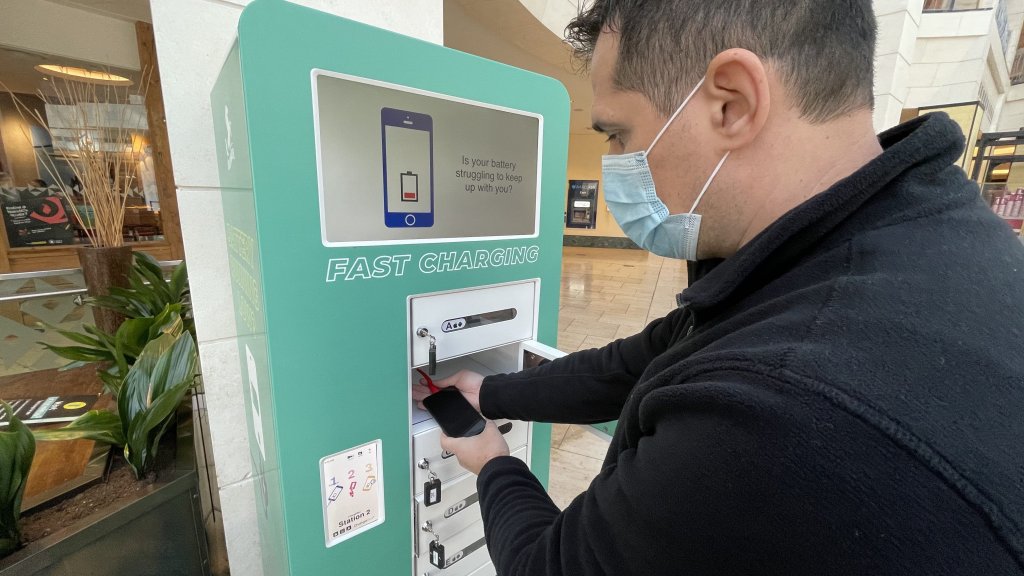
The first shopping centre in Europe to offer its shoppers free, fast mobile device charging
London, UK: ChargeBox today announced a new partnership with Bluewater, one of Europe’s leading retail and leisure destinations to offer its guests free, fast mobile device charging.
Bluewater is the first retail destination in Europe to offer ChargeBox’s Fast Charge technology which is up to 4 times faster than most shoppers are used to at home*. Therefore a device can be charged from zero to 50% in just 30 minutes, with no cost attached.
Bluewater recognises the importance of keeping their guests connected and that there are few things as irritating or anxiety-inducing as having a low phone battery. The phone is critical to the customer journey and central to the new experiences and technologies being deployed by retailers, from AR gamification to automated mobile checkout. The exponential growth in mobile proximity payments as a convenient alternative to cash post-pandemic gives additional importance to having a charged device.
Ian Hobson, CEO at ChargeBox, says, “We’re thrilled to be providing our brand new, market-leading fast charging solution at Bluewater. They recognise the importance of mobile devices in the shopper journey and are leading the way in improving the shopper experience post-pandemic.”
Robert Goodman, Director of Regional Shopping Centres, Landsec, says “We are always looking at innovative solutions to enhance experiences and to ensure our guests are fully catered for throughout their visit at Bluewater. ChargeBox will provide an additional service and complement the concierge, click and collect elements also available whilst providing connectivity for all.”
The benefits of this new partnership include:
· Improving the guest experience post-pandemic
· Supporting new consumer journeys reliant on mobile devices
· Surprising and delighting Bluewater visitors
About ChargeBox:
Since 2005, ChargeBox has led the way in providing secure out-of-home charging for mobile devices. We are the experts in helping companies keep their customers charged and connected and support mobile technology’s new demands.
Our clients benefit by improving customer satisfaction and loyalty, increasing footfall and spend while ensuring their customers can always use their smartphone for payments, information, coupons, and critical apps. As a result, customers experience reduced stress and anxiety from low batteries and feel safe in the comfort of knowing they can securely charge their phone and stay connected to their loved ones.
About Bluewater:
Bluewater, Europe’s leading retail and leisure destination, offers great shopping with free, extra wide parking and has over 300 stores and more than 50 places to eat and drink. Plus, with a 17 screen Showcase Cinema de Lux including IMAX, Gravity Trampoline Park and Dinotropolis Giant Soft Play, there’s something for everyone.
Find out more at bluewater.co.uk
*using a standard 5W charger
About Landsec:
At Landsec, we strive to connect communities, realise potential and deliver sustainable places.
As one of the largest real estate companies in Europe, our £10.8 billion portfolio of well-connected retail, leisure, workspace and residential hubs. From the iconic Piccadilly Lights in the West End and the regeneration of London’s Victoria, to the creation of retail destinations at Westgate Oxford and Trinity Leeds reduction and climate resilience. We deliver value for our shareholders, great experiences for our customers and positive change, we own and manage some of the most successful and memorable real estate in the UK.
We aim to lead our industry in critical long-term issues – from diversity and community employment, to carbon for our communities.
Find out more at landsec.com
The future of retail is being re-imagined – Part 1 Augmented Reality
Imagine the scenario. As you approach a new wine on the store shelf, you are immersed in a holographic environment. You find yourself stood in Burgundy, as a grower shows you where his grapes come from, before transporting you to his winery, where he prepares them for fermentation. Welcome to live holographic sales pitches from the producers.
The concept of a Store of the Future has long existed but is now more pertinent than ever. New technology will be an essential element of the Store of the Future, but it’s not only about using new technologies. Whether individually or collectively – experiential, technological, physical and location are all vital elements.
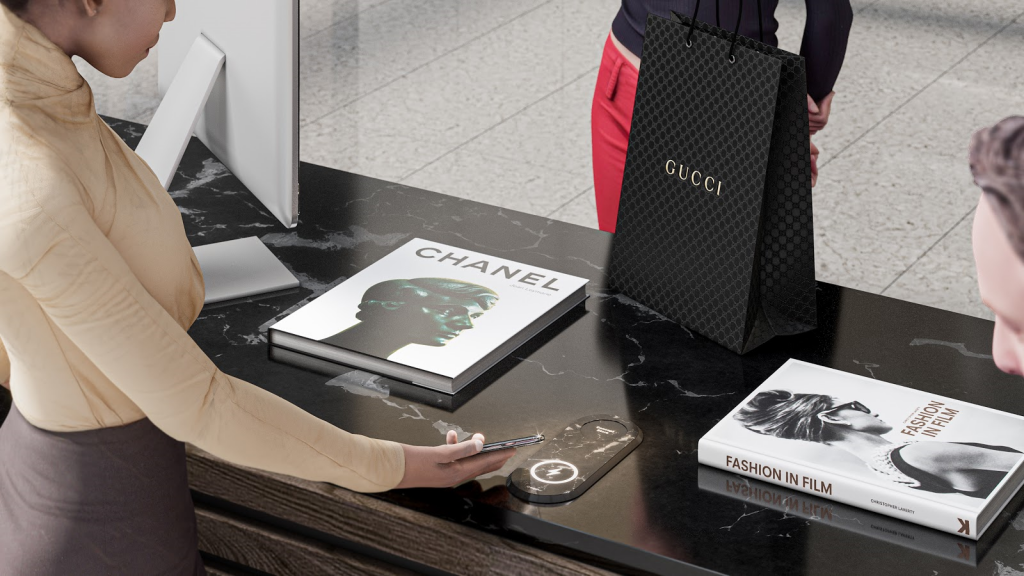
Retail has traditionally been a transactional environment, but now shoppers frequently want to experience as much as they do to buy. So starting with the customer need, brands are considering the experiences and services that will delight and surprise shoppers while importantly supporting the new customer journey.
The phone is critical to the customer journey and central to the new experiences and technologies being deployed by brands, from AR gamification to automated mobile checkout. In this series of blogs, we look at how mobile technology is helping shape the future of the physical store. Starting with an immersive technology which although not new, is one of the most innovative ways stores can combine the physical and digital experience for consumers. No, it’s not live holograms just yet but Augmented Reality (AR).
For the uninitiated augmented reality is a technology viewed through your smartphone that superimposes a computer-generated image on a user’s view of the real world, thus providing a composite view. AR technology has been around for a while, but apart from the brief Pokémon Go craze (remember those Emo zombies walking around your local park on a Saturday?), it has never quite become mainstream.
Some retail brands have dipped their toe in the virtual water, but are we at the point of the early majority? And will the synchronicity of 5G connectivity and the launch of AR apps or functionalities from the likes of Google or Apple give AR the chance to flourish finally?
A 2020 report from Unibail Rodamco Westfield ‘How We Shop: The Next Decade’ predicts that by 2025 more than half of all retail space in stores will be dedicated to providing experiences because shoppers want to escape from the mundane and are excited by the prospect of escapist experiences. AR is one solution to offer those escapist experiences.
Technology is both a threat and an opportunity for retailers. Today a whopping 92.6% of internet users worldwide use their mobile device to browse online, whilst global spending on mobile applications has risen from $57.7 billion in 2016 to $143 billion in 2020.

It is clear consumers want to use their mobile devices to search price comparisons, look for offers and product information, transact payments seamlessly, and learn from other customer reviews. The ability to share satisfaction or dissatisfaction with the brand in real-time in-store presents challenges for retailers.
Technology also gives the consumer a high degree of efficiency whilst shopping that they are coming to enjoy. But retailers do not necessarily want their consumers to experience efficiency while shopping. For example, in a supermarket, shoppers’ paths often cover less than 50% of the available floor space, but unplanned purchases typically make up around half of the items in their baskets. Either most people’s shopping lists are loosely defined, or they are easily influenced by promotions and displays in-store. Therefore, if AR in retail helps shoppers stay on task and experience increased efficiency, the impact on unplanned purchases and revenues will likely be negative.
But the reverse is more likely. Retailers should embrace AR technology to increase overall spending through unplanned purchases, which can be promoted by encouraging longer consumer shopping paths or increasing dwell time. AR applications can provide retailers with a powerful tool in the form of real-time information from the shopper. Any digital cues can be acted upon to provide customers with real-time mobile promotions designed to encourage unplanned purchases. Implementing AR in-store can dramatically enhance the experience and give shoppers access to enriched product information or virtual product demonstrations to increase purchase certainty.
Research has shown that interactivity and informative content are the key attributes of AR applications that influence consumers instead of any potential entertainment value that the apps may provide. So, how does that compare to what’s happening with today’s retail innovators, and what tactics are they using to attract and engage their audience?
Nike provides shoppers with an augmented reality-based challenge that looks to re-create the feeling of visiting Smith Rock State Park in Oregon at its “House of Innovation” store in New York City. They are gamifying the in-store experience encouraging customers to search around the store for AR and QR codes to unlock information about local wildlife and their outdoor products. On successful completion of the challenge, customers receive a physical gift. Nike is combining interactivity, information and entertainment, and it will be interesting to see if they roll out the concept to other House of Innovation stores globally.
Gucci is one of a handful of luxury brands experimenting globally with AR. They recently launched their virtual sneakers, which at $12 a pair are either a steal or daylight robbery depending on where and when you plan to wear them. Gucci also celebrated the Lunar New Year with a collection dedicated to the Japanese Manga character Doraemon brought to life in-store on the Gucci App thanks to AR. By scanning Gucci ArtWalls and the dedicated packaging, customers will discover the Doraemon character bought to life.

In a more prosaic but certainly informative and interactive way, beauty retailers such as Sephora and Ulta have turned to AR to help customers digitally test beauty products and help in buying decisions. Virtual try-on experiences are an excellent use case for AR in retail heightened by COVID and the increased focus on hygiene. If customers can’t physically test makeup products on their skin, then AR has got to be the next best alternative.
Lastly, and as big Snapchat fans at ChargeBox, one of our favourite examples of utilising AR technology is Burberry’s partnership with Snapchat to promote their Animal Kingdom pop-ups celebrating signature bags and accessories. Burberry has also partnered with Wildlife Works to make the pop-ups carbon neutral. Customers scan Snapcodes for the wildlife around them to come to life, along with informative content about sustainability and conservation. Snapchatters can then create their own content and share it with their network.
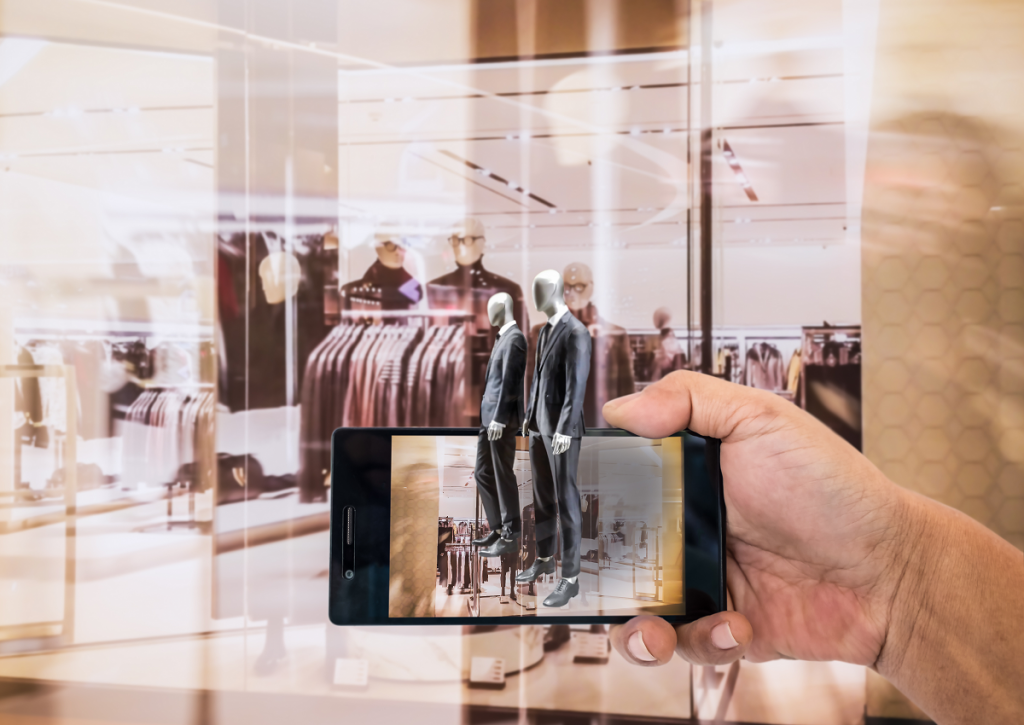
As these examples demonstrate, the smartphone is the centre of a consumer’s universe to enable these exciting experiences, which will be used in a multitude of ways to heighten the senses, drive engagement and improve the shopping experience in-store. Using their phones, consumers can shop and engage everywhere they go. In response, retailers must operate smart stores that can anticipate, sense and interact with customers everywhere they go — inside and outside of the store.
So until the time we are able to be treated to holographic wine producers in their Burgundy vineyards or a craftsman of handmade shoes in their studio we’re excited to see how the use of AR develops in retail, are you?
The ChargeBox Story
Since 2005, ChargeBox has led the way in providing secure out-of-home charging for mobile devices. We are the experts in helping companies keep their customers charged and connected and support mobile technology’s new demands.
Our clients benefit by improving customer satisfaction and loyalty, increasing footfall and spend while ensuring their customers can always use their smartphone for payments, information, coupons, and critical apps. As a result, customers experience reduced stress and anxiety from low batteries and feel safe in the comfort of knowing they can securely charge mobile devices and stay connected to their loved ones.
Mobile devices are essential to the customer journey and central to brands’ new experiences and technologies. Support your future customer journeys, and don’t let a dwindling phone battery inhibit your customers from embracing change.