Chargebox Powers Vodafone’s Connection Hub at Wimbledon
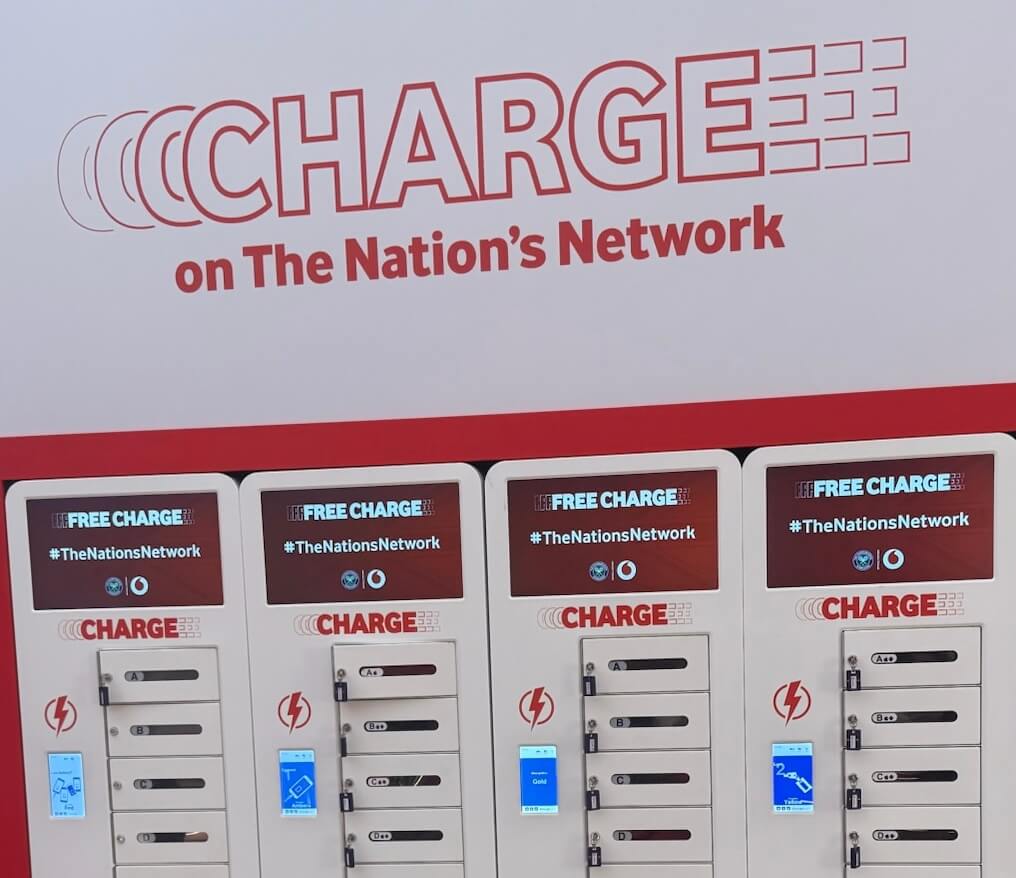
Where Can I Charge My Phone at Wimbledon?
If you’re heading off to The Championships this year and wondering “Where can I charge my phone at Wimbledon?” then we’ve got some good news!
With so many photo-worthy moments, live scores and messages flying around, your battery can drain fast. Luckily, fast-charging is available!
Free phone charging is available at Vodafone’s Connection Hub, located in the Southern Village. Whether you’re snapping a quick selfie on Centre Court or checking up on match stats, you can quickly top up your phone without missing any of the action.
Powered by ChargeBox, the charging stations at the Vodafone Connection Hub offer the fastest public phone charging around. You’ll be able to charge up from 0% to 20% in just 10 minutes which is perfect for a quick pit stop between matches or while grabbing a snack!
The Vodafone Connection Hub is more than just a charging spot — it’s a place to recharge yourself too. Relax in the shaded seating area, connect to free Wi-Fi, or learn more about Vodafone’s sustainability initiatives. Find out more here.
So if your phone is running low, just head to the Southern Village and plug in with ChargeBox. It’s fast, free, and gets you back to the action in no time.
If you used the service, we’d love to know what you think!
The ChargeBox Team
The Airport Passenger Charging Puzzle?
Nowadays, your smartphone is your boarding pass, wallet, entertainment, flight tracker—even your taxi at the other end. Which is why, for the modern traveller, low battery anxiety is real.
So it’s no surprise that passengers expect charging to be fast, seamless, and dependable. Just like Wi-Fi.
And yet… in most airports, it’s not.
Despite the best intentions, charging remains one of the most fragmented and frustrating parts of the airport experience. And that’s because a truly great charging service isn’t built by just sticking a few AC and USB sockets on some furniture.
It’s a puzzle. A surprisingly intricate one. And most airports are missing critical pieces.
At ChargeBox, we’ve spent over 15 years figuring out how to solve it—working with partners like Heathrow, Groupe ADP, and lux-Airport to build charging solutions that don’t just work, but transform the passenger experience.
🧩 The Puzzle Pieces
Let’s break it down. Here are the six key elements that define whether your airport’s charging actually delivers:
1. Capacity
How many passengers can actually charge at once?
You might see lots of ports—but if half are broken, slow, or hidden away, the real capacity is far lower. When we reviewed legacy charging zones at a major airport, we found that just 30% of the advertised capacity was truly usable.
2. Availability
Are those chargers working when passengers need them?
Airports are great at tracking availability for things like toilets and lifts. But charging? They often rely on costly manual inspections that are redundant as soon as they’re completed. We’ve seen whole rows of sockets offline for days with no one noticing—until the complaints start rolling in.
3. User Experience
Is it quick, obvious, and easy to use?
Travellers don’t have time to hunt for a socket, decode vague signage, or fumble with their own cables. They just want to plug in and charge. Our data shows passengers overwhelmingly prefer reinforced built-in cables—USB-C and Apple Lightning—ready to go, no apps, no fuss.
4. Infrastructure & Safety
Is your system compliant and built for the future?
Too many setups still rely on AC sockets or outdated USB-A ports—the latter are prone to easily breaking and are near obsolete, while the former can be unsafe. We design around low-voltage DC and USB Power Delivery (PD), offering fast, safe charging for today’s and tomorrow’s devices.
5. Operational Support
Who’s checking, maintaining, and fixing faults?
Without monitoring, it’s guesswork. Our remote SLA model uses real-time fault alerts and telemetry facilitated by our digitally connected solutions to guide airport teams (or their contractors) with pinpoint accuracy to deliver near-perfect uptime.
6. Data & Insight
Are you learning from how passengers charge?
With smart analytics, you can see usage patterns by time, specific location, and charging experience (cable, USB port, wireless). That insight helps shape smarter layouts, better maintenance planning, and more effective commercialisation.
🛠️ What Happens When the Puzzle Is Solved?
Let’s take Heathrow as an example.
We rolled out a managed charging solution in Terminal 2—and the results were immediate:
- – 300% more real-world charging capacity vs. the legacy setup
- – 100% uptime over the first 5 months, thanks to proactive digitally connected fault detection
- – Built-in specially reinforced USB-C and Lightning cables, Qi2 wireless pads, and USB sockets—16 simultaneous charge points per charging station
- – A safer, future-proof system built on low-voltage DC infrastructure (no need for problematic and dangerous AC sockets and no more tripped fuses due to dodgy chargers!)
- – A fully managed SLA, led by ChargeBox
- – Monthly usage insights that help Heathrow continuously improve
Passengers didn’t just notice — they used it. A lot! And the operations team gained a reliable, data-backed model now being extended across other terminals.
🧳 Where Lockers Fit In
We provide open and locker solutions, as not everyone wants to stand beside their phone while it charges.
That’s where Lock & Leave solutions come in. In retail zones, lounges, or anywhere passengers are likely to dwell, browse or eat, lockers give them the freedom to walk away knowing their device is secure and charging fast.
At ChargeBox, our lockers aren’t the old-school PIN-and-hope versions. They’re fully connected, remotely monitored and packed with reinforced fast-charge cables, delivering the same standards as our open-access podiums.
Blended deployments — Stay & Charge + Lock & Leave — are often the sweet spot. More capacity, more flexibility and better alignment with passenger behaviours.
📉 Why Most Solutions Only Solve Part of the Puzzle
There’s no shortage of well-meaning attempts to improve airport charging. But many fall short because they tackle just one or two of the six puzzle pieces.
- – A USB socket on a seat might technically work, but without signage, support, or monitoring, usage is low, and complaints are high
- – A cheap kiosk might look flashy—but is usually poorly equipped with cheap tech and breaks within weeks or months, with no way to efficiently know or fix it
- – An unmonitored wireless charging pad might offer convenience—but if it’s broken or slow, passengers won’t return
And that’s the problem: charging that fails quietly does more damage than charging that never existed.
📈 The Commercial Opportunity
Charging doesn’t have to be a cost centre.
When done well, it drives:
- – Longer dwell times in key zones
- – Sponsorship opportunities with banks, telcos, and lifestyle brands
- – Digital media space for advertising or airport communications
In Lux-Airport, our sponsored ChargeBox units have supported hundreds of thousands of charges since 2022. Those are thousands of small but powerful moments when passengers engage with a brand and remember it.
🧭 A Smarter Path Forward
Here’s how we recommend airports approach the charging puzzle:
- Audit what’s really there
- Pilot a managed solution through a Low Risk Discovery Project
- Future-proof your infrastructure
- Embrace digitally connected remote SLAs
- Link it to CX/ASQ/Skytrax scores and commercial goals
✉️ Final Thought
Airports pour resources into wayfinding, lounges, biometrics, and F&B—but if your phone’s dead, none of that matters.
Great charging is invisible when it works, and unforgivable when it doesn’t.
It’s time to stop treating charging like an afterthought—and start solving the puzzle.
📩 Want to explore how we’re helping Heathrow, Dublin, and others reimagine the passenger charging experience?
Visit www.chargebox.com/charging-solutions-for-airports or drop us a message at ChargeBox.
Justin Stark
Sales and Marketing Director, ChargeBox Ltd
Why Power Alone Isn’t Enough Anymore
A couple of weeks ago, I shared why phone charging deserves a spot on every airport exec’s radar. The response was… unexpectedly enthusiastic.
Clearly, it struck a chord. Or perhaps several—most of them frayed, proprietary, and last seen at the bottom of a drawer with a label that says “Do not throw away—might fit something.”
Either way, it became clear that this topic isn’t just about power—it’s about everything power enables.
So here’s the follow-up:
Passenger charging isn’t just an amenity anymore. It’s digital infrastructure. And it’s time we started treating it that way.
The Old World: Install, Forget, Repeat
We’ve all seen it…
That sad little charging station in the corner.
A few fraying cables.
Half the power sockets and USB ports dead.
A cluster of passengers performing yoga poses to stay plugged in while scrolling.
This is the “install and forget” model which is still surprisingly common, and while it might technically provide power (albeit inconsistently), it’s definitely not delivering experience, confidence, or anything remotely modern.
It’s the equivalent of putting a sign above it that says, “Good luck!”
Power + Intelligence = Better Airports
At Heathrow, we recently started rolling out a smarter charging solution —one that doesn’t just provide power, but reports back on how it’s being used, how well it’s performing and where it needs attention.
A few things changed immediately:
- Our ops teams started seeing issues before passengers did.
- Trends emerged—like when usage peaked and where more capacity was needed.
- We learned that some charging experience types are now vastly more popular than others (USB-C is quietly staging a coup).
In short we stopped guessing.
This wasn’t just an upgrade in hardware — it was a shift in thinking.
Charging can act as a Window Into Passenger Behaviour!
What surprised me most? Charging data has a personality.
It tells you when people are stressed (spikes during delays).
It tells you when they’re relaxed (slow, steady usage on Saturday mornings).
Even when they’re trying to regain control (Sunday afternoons, phones at 4%, boarding in 10 minutes…).
Seeing how your passengers charge can reveal much about them, especially when you have the right tools.
So What Does This All Mean?
It means we need to stop treating charging like a box-ticking exercise and start seeing it as a way to:
✔ Ensure availability without sending someone to check a charging station manually.
✔ Make investment decisions based on actual usage (not guesses).
✔ Improve CX by knowing you’re keeping passengers connected—and maybe a bit less stressed.
✔ Unlock commercial opportunities that don’t feel like advertising wallpaper.
The Bottom Line
Legacy charging gave (some) passengers power.
But smart charging gives airports power + insight + control.
And in an environment where every decision has to work harder, power alone just isn’t enough anymore.
We’d love to hear from others on this.
Are you seeing this shift in thinking in your airport?
Is charging on your radar — or still on your to-do list?
Let’s keep the conversation going.
Justin Stark
Sales and Marketing Director, ChargeBox Ltd
The Future of Device and Smartphone Charging: Understanding USB-C Power Delivery
In recent years, USB Type-C has become the standard connection for charging a multitude of devices, from smartphones and tablets to laptops and beyond. This evolution in charging technology has revolutionised how we power our gadgets, offering numerous advantages that enhance convenience, efficiency and speed. In this blog, we’ll delve into the benefits of USB-C power delivery, explore how this charging technology works, and provide tips on selecting the right adapters and cables.
USB Type-C: The Standard Connection?
USB Type-C, commonly referred to as USB-C, is a versatile and reversible connector that has swiftly become the go-to standard for modern devices. Unlike its predecessors, USB-C is designed to handle not just data transfer but also power delivery, allowing it to charge devices quickly and efficiently. Its symmetrical design means it can be plugged in either way, eliminating the frustration of trying to insert the connector incorrectly.
Advantages of Power Delivery via USB-C
One of the standout features of USB-C is its support for USB Power Delivery (PD). This technology offers several key advantages:
1. Faster Charging: USB PD allows for higher power levels, meaning devices can charge much faster compared to older USB standards. This is particularly beneficial for high-capacity devices like laptops and tablets.
2. Universal Compatibility: USB-C PD can charge a wide range of devices, from smartphones to laptops, using the same cable and power adapter. This reduces the need for multiple chargers, simplifying your tech life.
3. Enhanced Safety: USB PD includes features that protect devices from overcharging, overheating, and other potential hazards, ensuring a safer charging experience.
4. Flexibility: With variable power delivery, USB PD can adjust the power output according to the device’s requirements, making it highly versatile.
USB-C Power Delivery. How it works.
How the Charging Technology Works: USB Power Delivery is an advanced specification that significantly improves the standard USB charging protocols. Here’s how it works:
Negotiation Process: When a USB-C cable is connected to a device, the charger and device communicate to determine the optimal power level. This negotiation ensures the device receives the correct amount of power without exceeding its capacity.
Variable Power Levels: USB PD can deliver power at varying levels, typically ranging from 5V (volts) to 20V, and up to 100W (watts). This flexibility allows it to charge everything from small smartphones to large laptops.
Bidirectional Charging: USB PD supports bidirectional power delivery, meaning a device can either receive power or provide power to another device. This is particularly useful for scenarios where one device, like a laptop, can charge another, such as a smartphone.
Which Power Adapter is best for you?
Choosing the right power adapter is crucial for efficient and safe charging. Here’s how to ensure compatibility:
1. Check the Device’s Specifications: Look at your device’s user manual or manufacturer’s website to find the recommended power requirements.
2. Examine the Adapter’s Output: Ensure the adapter’s voltage and wattage match or are within the acceptable range for your device.
3. Verify USB PD Support: If your device supports USB PD, make sure the adapter does as well. Many modern adapters explicitly state their compatibility with USB PD.
4. Connector Type: Confirm that the adapter has a USB-C output, as using the correct connector type is essential for compatibility.
The Best Cable for Charging via USB-C
Not all USB-C cables are created equal. Here’s what to consider when choosing a cable:
Power Rating: Ensure the cable supports the power levels required by your device. High-quality cables often list their power ratings on the packaging or cable itself.
Data Transfer Speeds: While primarily used for charging, USB-C cables can also transfer data. If this is important, look for cables that support higher data transfer rates.
Build Quality: Opt for cables with robust construction to avoid wear and tear. Features like reinforced connectors and braided exteriors can enhance durability.
Certification: Cables that are USB-IF (USB Implementers Forum) certified have been tested for compliance and safety, ensuring reliable performance.
ChargeBox: UK-designed and manufactured.
We only use real Apple Type C USB cables for all our latest charging solutions. We also strengthen them to give them a x 10 lifespan. That’s the difference between a cable that would last 400 charges and one that lasts 4,000!
Conclusion:
USB-C and USB Power Delivery are transforming the way we charge our devices, offering faster, safer, and more versatile options. USB-C has undeniably set a new standard in the realm of charging technology. Its versatility, speed, and efficiency make it an essential component in our increasingly connected lives.
Understanding how this technology works and knowing how to choose the right adapters and cables can significantly enhance the charging experience and let’s face it no one likes waiting more time than they need to, for their phone battery to charge! 🔋
Mobile Phone Addiction and Nomophobia: Understanding the Digital Epidemic
Understanding Mobile Phone Addiction and Nomophobia: A Digital Epidemic
In today’s hyper-connected world, mobile phones are indispensable, offering unparalleled convenience by keeping us connected, informed, and entertained. However, this convenience has a downside: mobile phone addiction, a growing global concern, especially in the UK. One specific manifestation of this addiction is known as Nomophobia.
What is Nomophobia?
Nomophobia is the fear or anxiety associated with being without a mobile phone or beyond mobile phone contact. This term emerged from a study commissioned by the UK Post Office in 2008, highlighting the extent of mobile phone dependency among the public. Symptoms of nomophobia include:
- Panic or anxiety when the phone battery is low or there is no network coverage.
- Constantly carrying a charger or backup battery.
- Using the phone in inappropriate settings, such as during meals or social gatherings.
What is Mobile Phone Addiction?
Mobile phone addiction is characterized by an over-reliance on mobile devices, significantly interfering with daily activities, personal relationships, and productivity. Key signs of this addiction include:
- Excessive checking of the phone, even without notifications.
- Anxiety when the phone is not accessible.
- Spending more time on the phone than intended.
- Neglecting face-to-face interactions in favor of mobile device use.
Factors Contributing to Mobile Phone Addiction
Several factors contribute to the high levels of mobile phone addiction in the UK:
- Social Media: Platforms like Instagram, Facebook, and TikTok are designed to be addictive, encouraging continuous engagement.
- Work Demands: The rise of remote work and the expectation of constant availability compel many to check their phones regularly.
- Fear of Missing Out (FOMO): This psychological phenomenon drives individuals to stay connected to avoid missing out on important events, news, or social interactions.
Who Are the Most Addicted?
Certain demographics in the UK show higher levels of mobile phone addiction:
- Young Adults: Those aged 18-24 are particularly prone to mobile phone addiction. A University of Derby study found that 13% of young adults could be classified as “addicted” to their smartphones.
- Teenagers: The NHS has expressed concerns about the impact of excessive phone use on teenagers’ mental health, citing increased levels of anxiety, depression, and sleep deprivation.
- Professionals: Many working professionals also exhibit signs of mobile phone addiction due to the constant need to stay connected for work, coupled with social media use.
The Extent of Mobile Phone Addiction in the UK
Recent statistics paint a concerning picture of mobile phone usage in the UK:
- High Usage Rates: According to a 2023 Ofcom report, the average UK adult spends over 3 hours and 23 minutes per day on their mobile phone, highlighting our growing reliance on these devices.
- Frequent Checks: Research indicates that the average UK user checks their phone approximately 58 times a day, with younger adults (aged 18-24) checking around 79 times a day.
- Bedtime Usage: A Deloitte survey found that 41% of UK adults check their phones within five minutes of waking up, and 37% check their phones just before going to bed, leading to disrupted sleep patterns and other health issues.
Consequences of Mobile Phone Addiction
Mobile phone addiction and Nomophobia can lead to several adverse effects:
- Mental Health Issues: Continuous mobile phone use is linked to increased anxiety, stress, and depression. The constant bombardment of notifications and the pressure to stay connected can be overwhelming.
- Sleep Disruption: Exposure to blue light from screens before bedtime can interfere with sleep patterns, leading to insomnia and poor-quality sleep.
- Decreased Productivity: Frequent phone use can distract individuals from their tasks, leading to decreased productivity at work or school.
- Social Impact: While mobile phones are designed to keep us connected, excessive use can lead to social isolation, with people spending more time on their devices than interacting face-to-face with family and friends.
Combating Mobile Phone Addiction
Combating mobile phone addiction requires a multi-faceted approach:
- Digital Detox: Encourage periodic breaks from mobile phone use to reduce dependency.
- Setting Boundaries: Establish phone-free zones and times, such as during meals or an hour before bedtime.
- Mindfulness Practices: Techniques like meditation can help reduce anxiety associated with nomophobia.
- Professional Help: For severe cases, cognitive-behavioral therapy (CBT) has proven effective in managing addiction.
Conclusion
Mobile phone addiction and Nomophobia are growing concerns, particularly in technologically advanced societies like the UK. By understanding the signs of addiction and taking proactive steps to manage mobile phone use, individuals can regain control over their lives and reduce the negative impacts on their mental and physical well-being. With awareness and appropriate interventions, it is possible to foster a healthier relationship with our digital devices.
Sources:
- Ofcom Report 2023
- Deloitte Survey
- University of Derby Study
- NHS Mental Health Concerns on Teenagers and Mobile Phone Use
Mobile Phone Batteries: Their Evolution and Limitations.
In an era where technological innovations seem to know no bounds, one persistent challenge continues to vex smartphone users worldwide: the limitations of mobile phone batteries. Despite the leaps and bounds made in smartphone capabilities, the evolution of battery technology has been, and continues to be, a slower, more incremental journey. In this blog, we’ll explore the advancements and limitations of mobile phone batteries, their technology, and give you some tips on how to prolong battery life that help to liberate us from the tyranny of carrying chargers and charging cables.
The Evolution of Mobile Phone Batteries:
Mobile phone batteries have come a long way since the early days of bulky devices with limited endurance. The introduction of Lithium-ion batteries in the 1990s revolutionised the industry, offering higher energy density and longer-lasting power. However, while smartphones have evolved into sleek, multifunctional devices, battery technology still needs to catch up!
Advancements and Limitations:
While some smartphones boast impressive battery life, such as the Apple iPhone 15 Pro Max, Samsung Galaxy S24 Ultra, and Google Pixel 8 Pro, the reality is that most devices still require daily charging. Despite incremental improvements in battery longevity and efficiency, the fundamental limitations of Lithium-ion technology persist.
Why Batteries Lag Behind:
The disparity between smartphone advancements and battery capabilities can be attributed to several factors. Firstly, the demand for slimmer, lighter devices conflicts with the need for larger, more powerful batteries. Consumers prioritise sleek designs over extended battery life, leading manufacturers to prioritise form factor over function.
Additionally, the pace of battery technology development is inherently slower than that of other smartphone components. While processors, cameras, and displays undergo rapid advancements, battery technology faces inherent challenges such as energy density, safety concerns, and cost-effectiveness.
Mobile phone batteries rely on chemical reactions to store and release energy, making their advancements inherently more challenging compared to the physics-driven developments of other device components. While electronics progress swiftly due to advancements in physics, battery technology faces huge complexities in optimising chemical compositions and reactions, leading to slower progress and incremental improvements over time.
Future Developments:
Technology companies are actively exploring new avenues for battery innovation despite these challenges. Solid-state batteries, which utilise solid electrolytes instead of liquid ones, hold promise for higher energy density, faster charging, and enhanced safety. Companies like Tesla, Samsung, and Toyota are investing heavily in solid-state battery research, aiming to revolutionise energy storage across various industries.
Furthermore, advancements in materials science, such as the integration of lithium metal into battery designs, offer potential breakthroughs in energy density and longevity. Companies like Quantumscape are at the forefront of developing next-generation batteries based on lithium metal technology, paving the way for significant advancements in mobile phone batteries.
Tips for Prolonging Battery Life:
While we await the arrival of next-generation battery technologies, there are steps we can take to maximise the performance and longevity of our current mobile phone batteries:
- Optimise Settings: Adjust the display brightness, and enable power-saving modes to reduce battery consumption. Don’t wait for 20% level before low power mode is offered to go into it if you’re on a long day. There is some loss of features/notifications of course, but usually not much. See here https://support.apple.com/en-gb/HT205234
- Manage Charging Habits: Avoid frequent deep discharges and opt for partial charging whenever possible to minimise stress on the battery. The sweet spot is between about 20-80% charge. Newer iPhones for example let you set 80% as the maximum battery charge level which is good – unless you’re on a long day in which case turn it off for that day.
- Avoid Extreme Temperatures: Extreme heat or cold exposure can degrade battery health, so keep your phone in moderate environments. When in the car, don’t have it in full sun, or next to vents putting out hot air.
- Use Original Chargers: Stick to genuine certified chargers and cables provided by the manufacturer to ensure compatibility and safe charging.
- Consider Battery Replacements: If your smartphone’s battery performance significantly deteriorates over time, consider replacing the battery to restore optimal performance. Your device should tell you about the battery condition and its capacity. You can expect some deterioration after between 500-1000 charge cycles, with more after that level. 3+ year-old devices may well benefit, though if carefully managed, can give much longer life.
- Fast-charging technologies often incorporate features such as temperature management and voltage regulation to minimise stress on the battery, helping to prolong its lifespan.
Conclusion:
While mobile phone batteries may lag behind the rapid pace of smartphone advancements, ongoing research and development efforts offer hope for a future where battery life ceases to be a daily concern. By embracing emerging technologies and adopting prudent battery management practices, we can free ourselves from the shackles of charging cables and enjoy uninterrupted connectivity on our smartphones. And when you consider that the average person checks their phone 150 times a day (that’s once every 6 minutes!), our hunger for battery juice than never depletes, is only going to increase.
It might not be long before we can see the prototypes for a more powerful, kinetic charging system that harnesses motion or mechanical energy to generate the electricity needed to power a smartphone. Exercising to charge up all round?
Unlocking Personalities: Decoding Your Mobile Phone Charging Habits
Welcome readers! As you know, here at Chargebox we love spending our lives obsessing about the best phone charging experiences so that you don’t have to. Normally we’re buried deep stats about user experience, charging speeds, secure lockers, cable specs, location specifics, hospital, airport, retail, events… Well you get the idea!
We recently came across the article “New study reveals the ten types of mobile phone users”, (by behavioural analyst, Emma Kenny) and liked it so much, it got us thinking.
Are there any obvious traits or quirks that people display in their phone charging behaviour and what these habits might say about them?
So we locked our best and brightest minds in a room with all our phone charging data and insight, collected over many years, and this is what they came up with – five distinct types of mobile phone charging behaviours and personality types.
The Night Charger :
Ah, the night charger – the steadfast souls who plug in their phones before hitting the hay and let them juice up all night long. These individuals believe in starting each day with a fully charged device, even if it means their poor phone spends more time plugged in than they do! To them, a charged phone equals peace of mind, even if it means sacrificing a bit of battery longevity in the process.
The Prepared Packrat (Power Hoarder) :
Meet the prepared packrat, armed to the teeth with battery packs, charging cables, and plugs galore. You’ll never catch these folks with a low battery warning – they’re like modern-day Boy Scouts, always ready for a charging emergency. Whether it’s a trip to the local shop or a trek through the wilderness, they’ve got enough charging firepower to keep their devices going for days on end.
The Rule Follower :
For the rule follower, every percentage point of battery life is precious, and they’re not about to jeopardize it by overcharging. These cautious chargers strictly adhere to the manufacturer’s recommendations, never leaving their phones plugged in for a moment longer than necessary. They’re the ones you’ll catch unplugging their phones at precisely 80% battery, following the advice to maximize battery health – even if it means a few extra trips to a charging point throughout the day.
The Forgetful Wanderer :
Ah, the forgetful wanderer – forever chasing elusive power outlets and muttering curses under their breath as their battery dwindles to single digits. These free spirits have a knack for leaving home without a charged phone and are no strangers to the dreaded dead battery scenario. But fear not, for they’ve mastered the art of creative charging solutions, from begging bartenders for access to outlets to scavenging for USB ports in coffee shops.
The Eternal Optimist :
Last but not least, we have the eternal optimist – the dreamers who believe that battery life is but a mere suggestion and that their phones will somehow defy the odds and stay powered indefinitely. You’ll find them gleefully ignoring low battery warnings and living life on the edge, convinced that their device will miraculously hold out until they reach their next charging destination. Ignoring the subtle warnings of impending power depletion, they gallivant through life with boundless optimism, convinced that their device will miraculously power through any charging emergency, somehow! And hey, sometimes they’re right – but when they’re wrong, they’re spectacularly wrong.
Just like fingerprints, each person’s charging style is unique and tells us something about their personality.
So, which charging persona resonates with you? There’s no right or wrong way. Or is there?
Thanks for reading!
#Charging #Phone #Chronicles #Mobile #Psychology
What are the risks of public phone charging?

This month the FBI warned that using public charging may put your data at risk but what are the REAL risks of using public phone charging?
ChargeBox has provided secure charging solutions for public use since 2005. We are privileged to partner with many of the world’s best-known retail, education, public transport, healthcare and event organisations.
We have never experienced a breach of our users’ data in all that time with over 55 million charges provided!
So let’s look at what we know about public charging stations and the risks you need to be aware of when using one.
What is Juice-Jacking?
“Juice Jacking” is a cyber-attack where a hacker gains unauthorised access to a device such as a smartphone by compromising the USB port. Once malware is installed on a device, it can perform various malicious actions, such as stealing sensitive data, track user activity, or even give hackers remote access to the device.
OMG, that sounds scary. Does it happen a lot?
No, it doesn’t. It’s unclear how common these attacks are; any instances have not been widely publicised. The risk was first identified in 2011, so it’s not a new threat.
So, the risk of it happening is extremely low?
The risk of ‘Juice Jacking’ is infinitely small. However, your safety and access to essential phone capabilities are at risk if your battery is low or out of power. These risks are far higher than the danger of having your device hacked.
So are public charging solutions safe?
It’s not possible to say, with absolute 100% certainty, that ALL public charging solutions are safe but as with most things in life, it’s up to the individual to make informed decisions.
That makes sense. Can I limit the likelihood of this happening to me?
It’s important to practice good cybersecurity habits. Here’s what we recommend:
- Always keep your device up-to-date with software updates, especially security updates. This is your first level of protection against any form of attack on your device in any situation.
- Once software updates are no longer available due to the age of your device, you should consider getting a newer device.
- If you are using a public charging solution, where are you? If you’re in a location managed by a respectable company, you can expect that company to have procured a safe & secure solution that can’t be tampered with.
- If you’re unsure who is providing a solution, look for a name and a website. Check the origins of the equipment, the company, and its data and device security pledges.
What precautions does ChargeBox take to ensure the safest and most secure charging experience?
- Our charging solutions, including electronics and firmware, are designed and manufactured in the UK. We use our own software to control our solutions with the highest levels of security in mind.
- We are governed by national laws in the countries we operate, and our business depends on our end users having a great experience and our clients who host ChargeBox giving a great experience to their visitors.
- ChargeBox solutions are connected securely to our servers, giving us precise information about operational levels and recording the safety of the charge.
- The charging components and cable endings we use are all securely locked so they are not accessible to third-party agents without evidence of tampering.
Isn’t this all a storm in a teacup? Surely the FBI has got more significant cybersecurity concerns to deal with?
Yes! It distracts from device and data safety dangers for which the FBI has been notably absent – namely, the sophisticated malware attacks aided by systems such as Pegasus and others.
Finally, out of interest, what data does ChargeBox access?
Our users’ data privacy is a fundamental aspect of our business model and company ethics. For complete details of your data privacy with any interactions with our stations or our company please visit:
https://www.chargebox.com/your-data-privacy-with-chargebox/
Thanks for reading!
Upgrading Your Event Experience With A Phone Charging Station
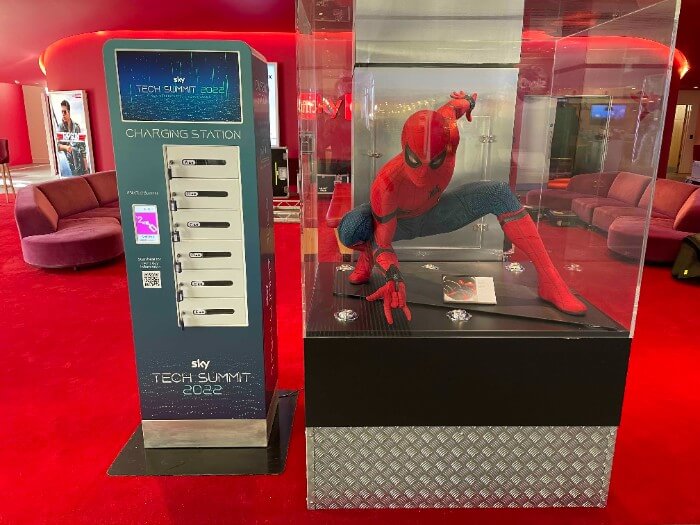
Free phone charging is an essential addition to any event, providing attendees with the opportunity to stay connected and make the most of their experience. Running out of power can cause major anxiety and frustration for guests. When device batteries are low, attendees may become disconnected from the event and ultimately leave before they’ve had a chance to enjoy it fully.
Providing easy access to free charging capabilities creates a feeling of convenience for your guests and enhances their overall experience by removing potential stress or worry about battery life.
Mobile devices have become indispensable tools
Mobile devices have become indispensable tools for staying connected, both in our private lives and in business. They allow attendees to navigate their way around the venue easily with app maps or GPS; they give quick access to tickets, loyalty cards, and other digital passes; they enable event goers to stay up-to-date with live event news, updates and offers; and of course, they let people engage in conversations with their peers by sharing photos, videos and thoughts on social media.
At events, mobile device batteries can run down quickly as attendees take advantage of all the features they offer. If battery levels become too low it can inhibit the full enjoyment of a particular event experience.
Fast Charge is essential for the event experience
Offering Fast Charge at events greatly enhances the experience for many attendees. By incorporating USB 3.1 Power Delivery technology, device batteries can charge up to 2-4 times faster than traditional methods, decreasing wait times and allowing users to spend more time enjoying the event instead of waiting for their phone to charge.
This revolutionary technology can also dramatically increase service availability. By decreasing the amount of time needed to use a charger, more attendees can access the phone charging station and have their phones charged in a shorter period of time. This can be a huge benefit for event organisers who want to maximise the event experience for all of their guests.
Fast Charge is the perfect way to provide a reliable phone charging service and make sure that everyone can power up their device in no time.
A charging station is a great way for sponsors to be involved
Phone charging stations offer a unique solution to both boost event engagement and provide convenience to guests. They can also be used as a platform to strengthen the brand presence of sponsors or partners. They effectively turn phone charging into an immersive experience with customised vinyl wraps and digital screens ensuring that companies remain visible throughout the event.
This can go a long way in creating an unforgettable experience for your guests while offering them an invaluable source of convenience. Allowing companies to take advantage of this valuable service helps to create a halo effect around their brand, further increasing loyalty and improving overall event success.
What’s the right charger for me?
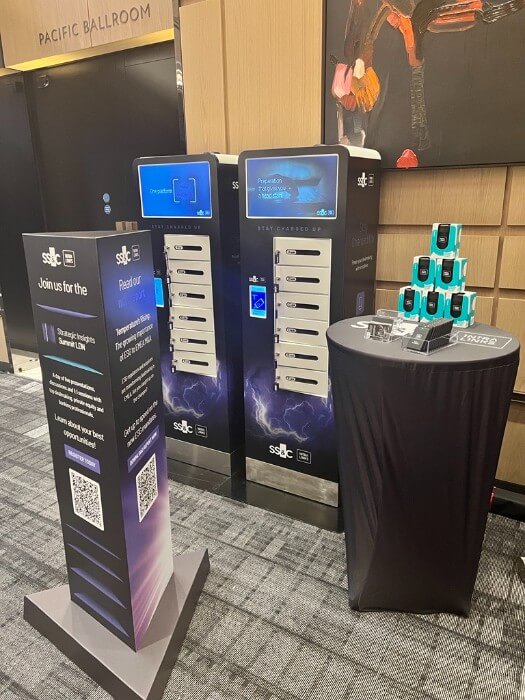
When selecting a solution, there are a number of options to consider. From ‘Lock and Leave’ solutions that allow users to safely leave their mobile phone to charge while they get on with their day, to ‘Stay and Charge’ solutions that enable people to charge their devices while still using them, you’ll have no trouble finding the perfect mobile phone charging for your needs.
What else is important when considering mobile phone charging stations?
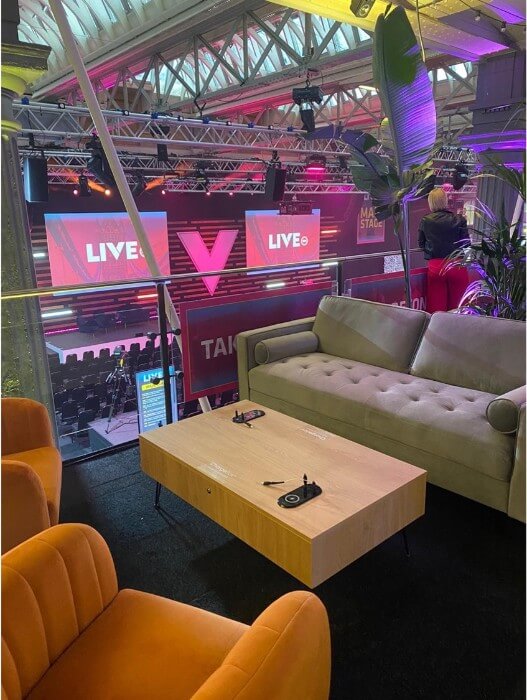
In addition to choosing the right phone charging station for your event, you should also factor in how many are needed and where they should be located. Make sure that charging services are placed near seating or areas of high traffic so attendees can easily access them throughout the event.
Moreover, ensure that these chargers boast reliable security features such as remote management capabilities and fault detection protocols to provide maximum protection for users. With this in mind, selecting the right phone charger will prove invaluable in ensuring a great event experience for your guests and peace of mind for yourself!
Other considerations when choosing charging stations
To ensure that devices are safe, it is important to use phone charging stations manufactured by a reputable company with stringent safety protocols in place. Additionally, phone charging stations should have real-time monitoring systems installed so that potential problems can be identified and dealt with immediately.
Furthermore, services should have multiple layers of encryption in order to safeguard user data from any malicious activity. Finally, having an onsite technician present who is skilled in resolving technical issues related to device charging will help maintain a smooth event experience for event-goers.
Phone charging solutions, an essential service
In conclusion, free phone charging solutions can be a great addition to any event as they provide convenience and peace of mind.
When selecting phone charging solutions for your event, make sure you factor in the type of phone charger needed, where it should be located and the security features that need to be implemented.
Fast-Charge phone chargers are perfect for events requiring shorter wait times and higher service availability. Something to watch out for! Choose reputable companies with stringent safety protocols in place when it comes to device charging where public liability is a consideration.
If you would like help finding the right phone charging solution for your next event, then drop us a message! We’d love to hear more about your vision and help make it a reality.

Should mobile phone charging be a free public service?

We all like something for free but what public services do we deserve to get for free and what should we pay for? If you are required to pay to use a toilet or to access WiFi in a public space, it can leave a bad feeling as the expectation is that these services should always be free. But what about public phone charging? Shouldn’t that be a free public service too?
When ChargeBox launched in 2005 the original idea was that people would happily pay less than the price of a cup of coffee to charge their phone. For the first few years, ChargeBox operated as a pay-to-use service. It wasn’t until a major mall operator approached us in 2011 asking for a free-to-use service for their shoppers, that everything changed.
When we launched our free-to-use service usage increased by over 2000% overnight. People love free phone charging!
Now over 95% of our charging locations are free to use.
But what’s right for your location?
Free to Use:
- Increases customer satisfaction and enhances the experience. Adds to your location’s positive brand identity.
- Facilitates charging at scale. More people using the service means that visitors dwell for longer and are likely to be happier and more satisfied by the ease of being able to stay connected.
- Greater ROI. 100 people using a free service will benefit you exponentially more (additional spending & goodwill) than the revenue 5 people will generate for you by paying for phone charging. (In our experience Pay to Use phone charge volume is ~ 5% of Free to Use phone charge volume.
- A service available to all without discrimination. Yes if people are really in need of a phone charge you could argue that they will pay for it. But what about the people who can’t afford it or have to prioritise what is most essential at that time?
- Less staff intervention is required. A paid service adds an additional layer of complexity to providing a service – more can go wrong.
Pay to Use:
- Limits anti-social behaviour. With payment required and an audit trail back to the user it discourages misuse e.g. kids congregating around a free service.
- Will generate a small direct revenue stream in certain locations, typically ones where people can’t or won’t leave easily e.g. hospitals, casinos and theme parks.
- When a location has zero budget it allows them to offer an essential service at little to no cost.
At ChargeBox we offer both Free to Use and Pay to Use services and ultimately the decision on what is best for your location is down to you. What links our free and pay-for services is that they are both the best charging experiences available.
- The fastest available phone charging. Three to four times faster charging than any alternative solutions.
- Simple and intuitive to use with minimal barriers to get charged up!
When you’re paying for a service these factors become even more critical.
Which service would you lean towards as a business owner? We’d love to hear your views.
Team Chargebox